
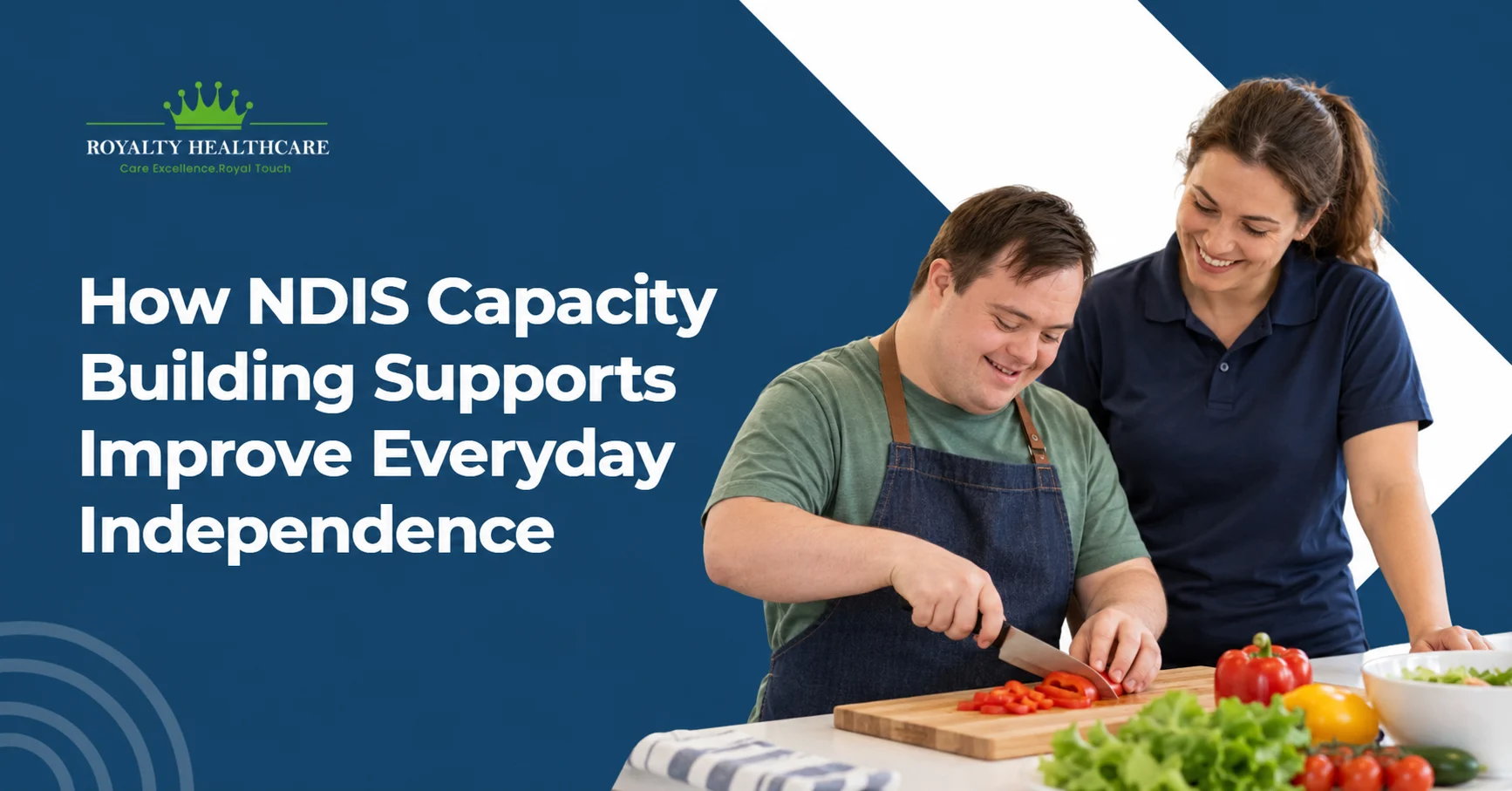
How NDIS Capacity Building Supports Improve Everyday Independence
Making a cup of tea. Catching the bus to work. Paying a bill on time, or calling a friend to make weekend plans.


Making a cup of tea. Catching the bus to work. Paying a bill on time, or calling a friend to make weekend plans.

When an NDIS plan includes funding for mental health supports, it tells you what can be paid for. It doesn’t tell you what good support actually looks like.

When someone you love needs help with breathing, eating, seizures, or behaviours that put them at risk, disability care stops being an abstract idea. It becomes a daily, hands-on reality.

Your NDIS plan has finally arrived. It runs to several pages, splits your funding into budgets with unfamiliar names, and lists goals you talked through weeks ago.

Behind almost every NDIS participant is a family carer a parent, partner, sibling, or adult child who quietly holds everything together.

When people first receive an NDIS plan, most of their attention goes to what is funded: the supports, the therapies, the hours of care.

Opening your first NDIS plan can feel overwhelming. You see a total dollar figure, a set of unfamiliar category names, and a long list of rules about what you can and can’t spend money on.

If someone you love has just come home with a PEG tube, a tracheostomy, or a bowel care routine that has to be followed exactly, the paperwork can feel like the least of your worries right up until the moment it becomes the whole problem.

For many NDIS participants, the difference between managing well at home and cycling in and out of hospital comes down to one thing: reliable clinical care delivered where they live

Independence rarely arrives all at once. For many people living with disability, it’s built quietly one morning routine, one bus trip, one confidently managed appointment at a time.
