
NDIS Life Skills Development: Everyday Supports That Make Daily Living Easier
Independence rarely arrives all at once. For many people living with disability, it’s built quietly one morning routine, one bus trip, one confidently managed appointment at a time. This is exactly where NDIS life skills development comes in. Rather than doing everything for a person, these supports focus on helping them learn to do more themselves, so that daily living becomes steadily easier and more within their control.
We provide this service to help NDIS participants take charge of their routines, improve self-care and grow in confidence both at home and out in the community. You can learn more about how it works through our development life skills program.
This guide breaks down what life skills supports actually involve, who they’re for, and how they translate into real, everyday progress.
What Are NDIS Life Skills Supports?
Life skills supports are designed to equip people with the knowledge, confidence, and practical ability to manage day-to-day personal and household activities. Within the NDIS, this sits under the Capacity Building budget, specifically the category the NDIS describes as “Improved Daily Living Skills.” Unlike Core Supports, which provide a worker to complete tasks on your behalf, capacity building is about developing skills so you can do more independently over time.
Put another way, it’s the difference between someone cooking a meal for you and someone teaching you how to cook safely for yourself.
The NDIS explains that these supports include assessment, training or therapy to maintain, develop or increase your skills and capacity for independence and community participation, and that these services can be delivered in groups or individually. You can read the official definition directly on the NDIS capacity building supports page. National Disability Insurance SchemeNational Disability Insurance Scheme
The key principle is simple but powerful: you’re not just receiving help, you’re learning to do things yourself. Every skill developed becomes a permanent part of a person’s independence, rather than something that has to be arranged again and again.
Core Areas Life Skills Supports Cover
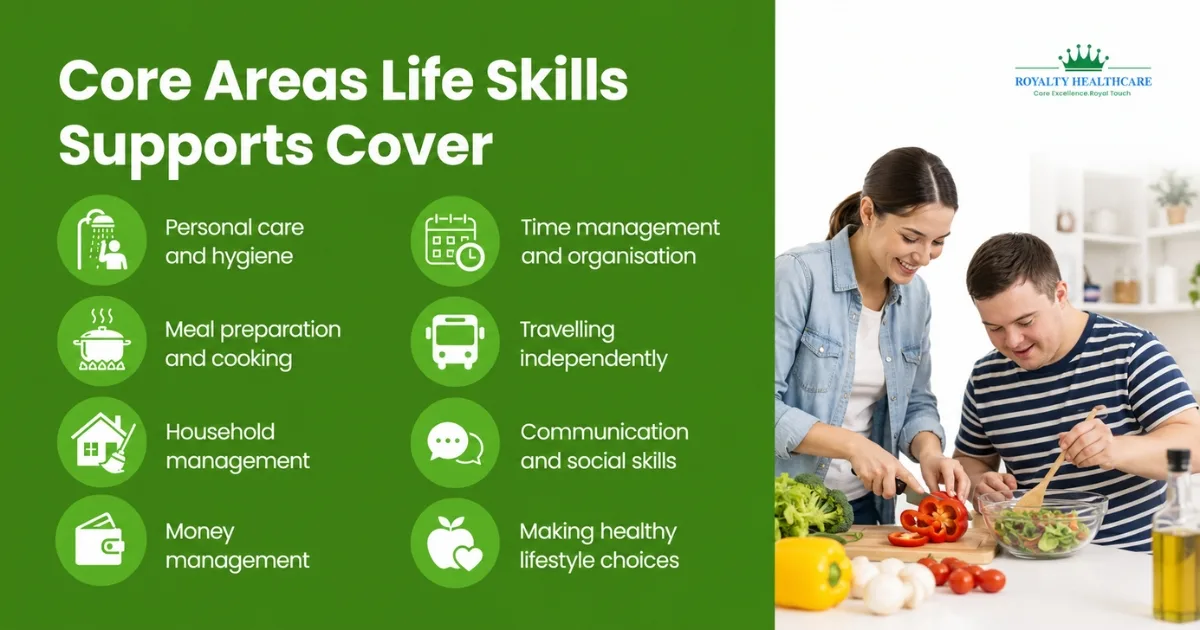
Everyday independence is made up of many small skills working together. Life skills development targets these building blocks one at a time. Here are the key areas typically supported, with a short explanation of what each involves:
- Personal care and hygiene — Building confidence and routine around showering, dressing, grooming and daily self-care, ideally managed without prompts. These are foundational to health, dignity and feeling ready to face the day.
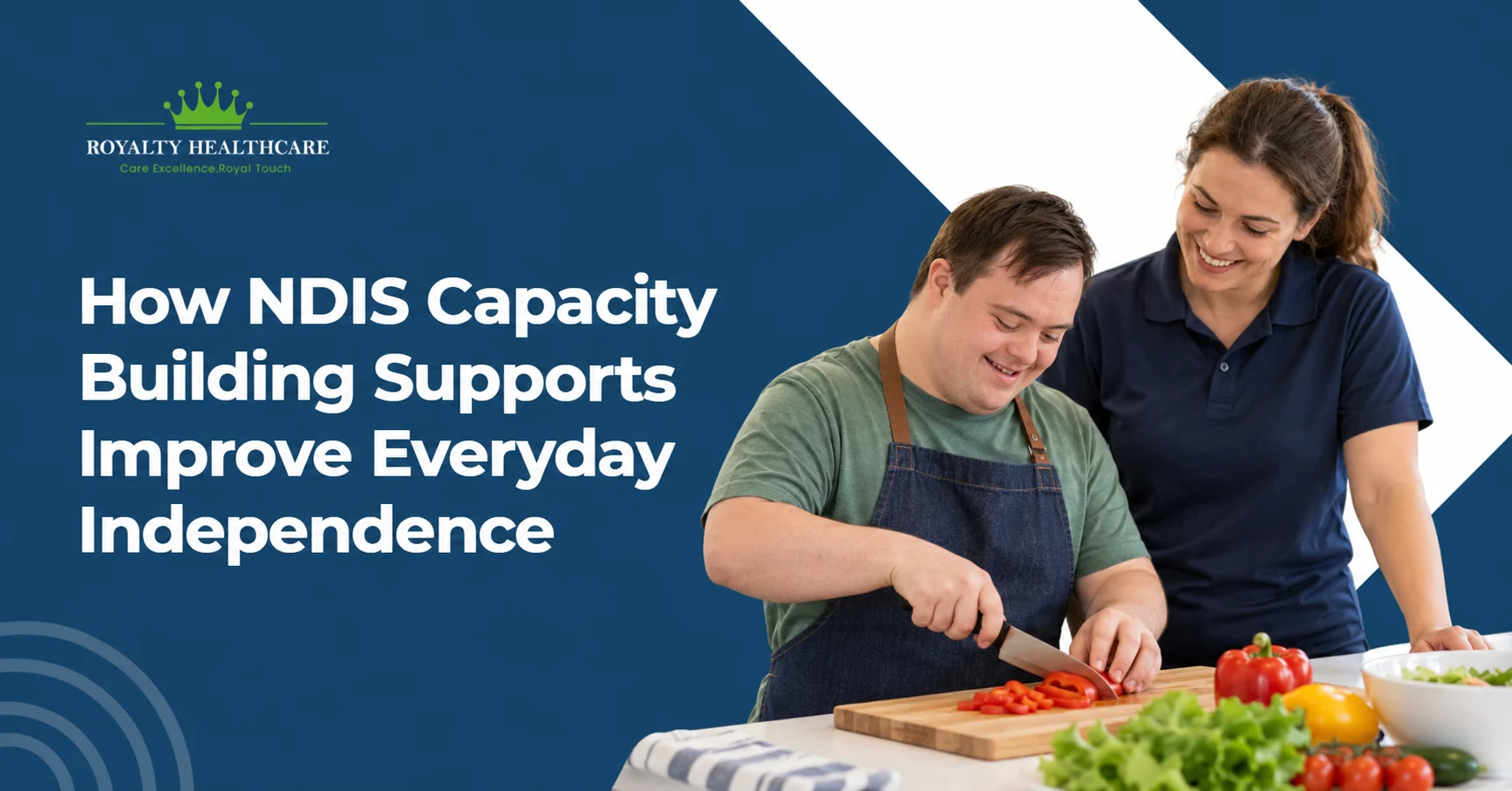
- Meal preparation and cooking — Learning to plan meals, shop for ingredients, follow recipes and cook safely. This builds both practical kitchen ability and nutrition knowledge, so people can choose what they eat.
- Household management — developing skills in cleaning, laundry, organising a space and basic home maintenance, which keep a home safe, comfortable and easy to live in.
- Money management — Learning to budget, use banking tools, pay bills and make everyday purchasing decisions with confidence. Financial literacy is central to genuine independence.
- Time management and organisation — Building systems to structure the day, remember commitments, prepare for appointments and complete tasks without feeling overwhelmed.
- Travelling independently — Practical travel training that covers reading timetables, using transport cards and getting around safely by bus or train. This unlocks access to work, study, services, and social life.
- Communication and social skills — Support with expressing yourself, asking for help, starting conversations and understanding social boundaries — are the foundations of meaningful relationships.
- Making healthy lifestyle choices — Guidance on the everyday decisions that shape long-term wellbeing, from activity and nutrition to sleep and general routine.
By strengthening each of these areas step by step, participants experience a growing sense of achievement, control, and independence rather than feeling overwhelmed by trying to change everything at once.
How Life Skills Development Actually Helps
It’s one thing to list skills, and another to understand the difference they make in day-to-day life. Here’s how structured life skills development translates into meaningful outcomes, with the reasoning behind each:
- Greater confidence in daily routines — When someone masters their own morning routine or learns to prepare a simple meal, the flow-on effect reaches everything else. Confidence in one area builds momentum in others.
- Reduced reliance on others for basic tasks — The goal isn’t to remove support entirely, but to shift the balance so individuals can handle more themselves and call on help only where it’s genuinely needed.
- More choice and control — As the sources put it, learning to cook means you can choose what you eat. Managing money means you control your finances. Using public transport means you can go where you want. Skills open doors to real decision-making.
- Improved health and wellbeing — Consistent self-care and nutrition routines directly support physical and mental health, reducing avoidable issues and helping people feel their best.
- Progress toward NDIS goals and lasting independence — Every skill developed is a concrete step toward the independence goals set out in a participant’s plan, with progress that compounds over time.
This is the heart of capacity building: it focuses on long-term improvement rather than short-term assistance, so the benefits keep growing well beyond any single session.
A Personalised, Practical Approach
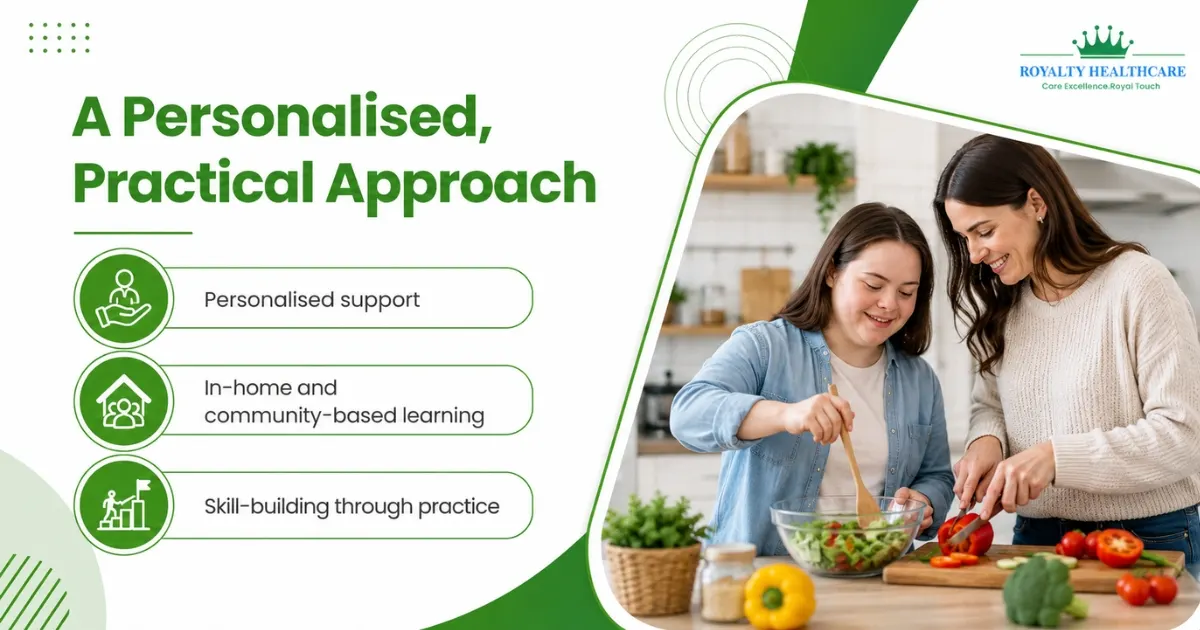
No two people share the same starting point, goals, or preferred way of learning, so effective life skills support is never one-size-fits-all. The most effective approach is built around the individual through a few key principles.
1. Personalised support ensures the program reflects each person’s specific goals, abilities and learning style. A plan built around real priorities is far more motivating than a generic checklist.
2. In-home and community-based learning gives flexibility in where skills are developed. Some skills are best practised at home, in a familiar and comfortable setting; others, like using public transport or navigating social settings, are best learned out in the real world where they’ll actually be used.
3. Skill-building through practice recognises that independence grows through doing. Rather than simply instructing, effective support guides, demonstrates, and encourages, staying alongside the person until confidence builds and the skill becomes second nature. Real progress is often gradual: one participant might begin with structured support to establish daily routines, and over time that guidance reduces as the routines become familiar and self-directed.
This combination of tailoring, real-world application and hands-on practice is what turns support into genuine, lasting capability.
Who Is Eligible?
Life skills development is available to NDIS participants who have capacity-building funding in their plan connected to goals around independence, daily living or community participation. Because every plan is individual, eligibility depends on your specific goals and circumstances at the time of your planning meeting.
It’s worth noting that not every NDIS plan includes Improved Daily Living Skills funding. Plans are individual and based on your goals, needs, and circumstances at the time of your plan review. If you’re unsure whether your plan includes this funding, it’s a good idea to check before booking services. A support coordinator or Local Area Coordinator can help you understand what’s available and how best to use it. It also helps to understand how your overall budget works. The NDIS provides a helpful overview in its guide to support budgets. Care Decisions
Taking the First Step
Building everyday independence is a journey, not a single leap, and it’s one you don’t have to take alone. With consistent, personalised support, the routines that once felt daunting gradually become second nature, opening the door to a more confident and self-directed life. As every new skill is mastered, new possibilities follow: more choices, more freedom, and more control over daily life.
We provide this service to help make that journey easier, meeting each person where they are and building from there at a comfortable pace. If you or someone you care for is ready to develop practical life skills and make daily living easier, we’re here to help. Explore our development life skills program or visit our website to find out how we can support your goals.