

How NDIS Capacity Building Supports Improve Everyday Independence
Making a cup of tea. Catching the bus to work. Paying a bill on time, or calling a friend to make weekend plans. For most people, these moments pass without a second thought. For many people living with disability, each one is a skill that took time, practice, and the right support to build.
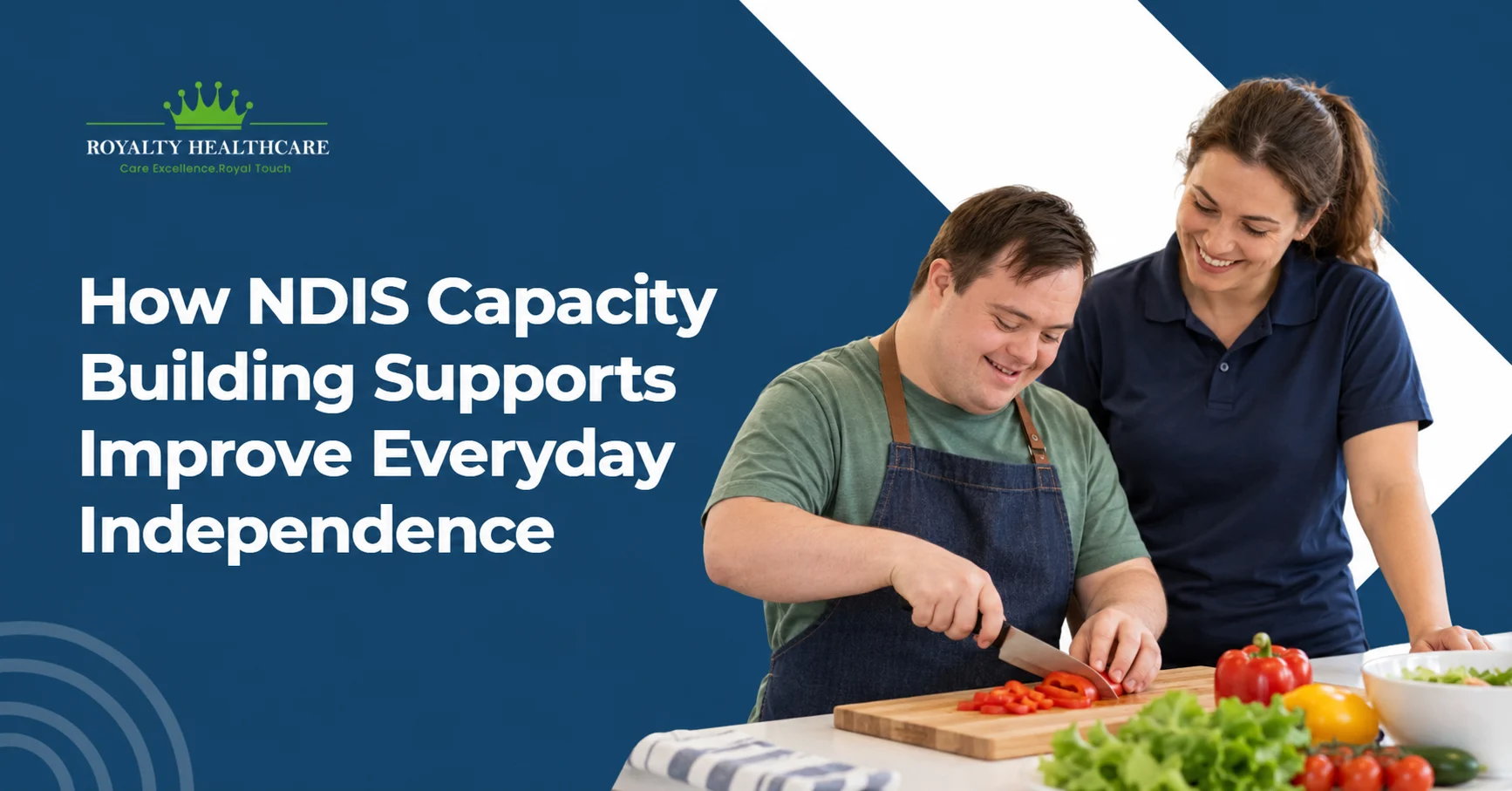
That is exactly what NDIS capacity building support is designed to fund. Rather than paying someone to do tasks for you, capacity building pays for the training, therapy and coaching that help you do more of those tasks yourself. Over time, the effect adds up to greater confidence, more choice, and a life that runs on your terms.
In this guide, the Royalty Healthcare team explains what capacity building supports are, the nine categories your plan can include, the everyday skills they help build, and how to get real value from this part of your NDIS plan.
What Capacity Building Supports Actually Are
Capacity building supports are one of four support budgets in an NDIS plan, alongside core supports, capital supports and recurring supports. According to the National Disability Insurance Agency, they exist to build your skills so you can do things for yourself and work towards your goals.
The easiest way to understand NDIS capacity building is to compare it with core supports. Core supports pay for help with everyday activities as they happen, such as a support worker who helps you shower, prepares a meal, or assists with shopping. Capacity building pays for the learning behind those activities: an occupational therapist who redesigns your morning routine, a support worker who teaches you to plan and cook a weekly menu, or a coach who rides the bus with you until you can travel alone.
Most plans include a mix of both, and both matter. The difference is direction. Core supports keep daily life running safely today, while capacity building is an investment in what you will be able to do six or twelve months from now.
One rule is worth knowing early. Capacity building funding is a stated support, which means you cannot move money between capacity building categories. Each category must be spent on the type of support it describes, using items from the NDIS supports lists. If your goals change, the right step is a conversation about your plan rather than a reshuffle of funds.
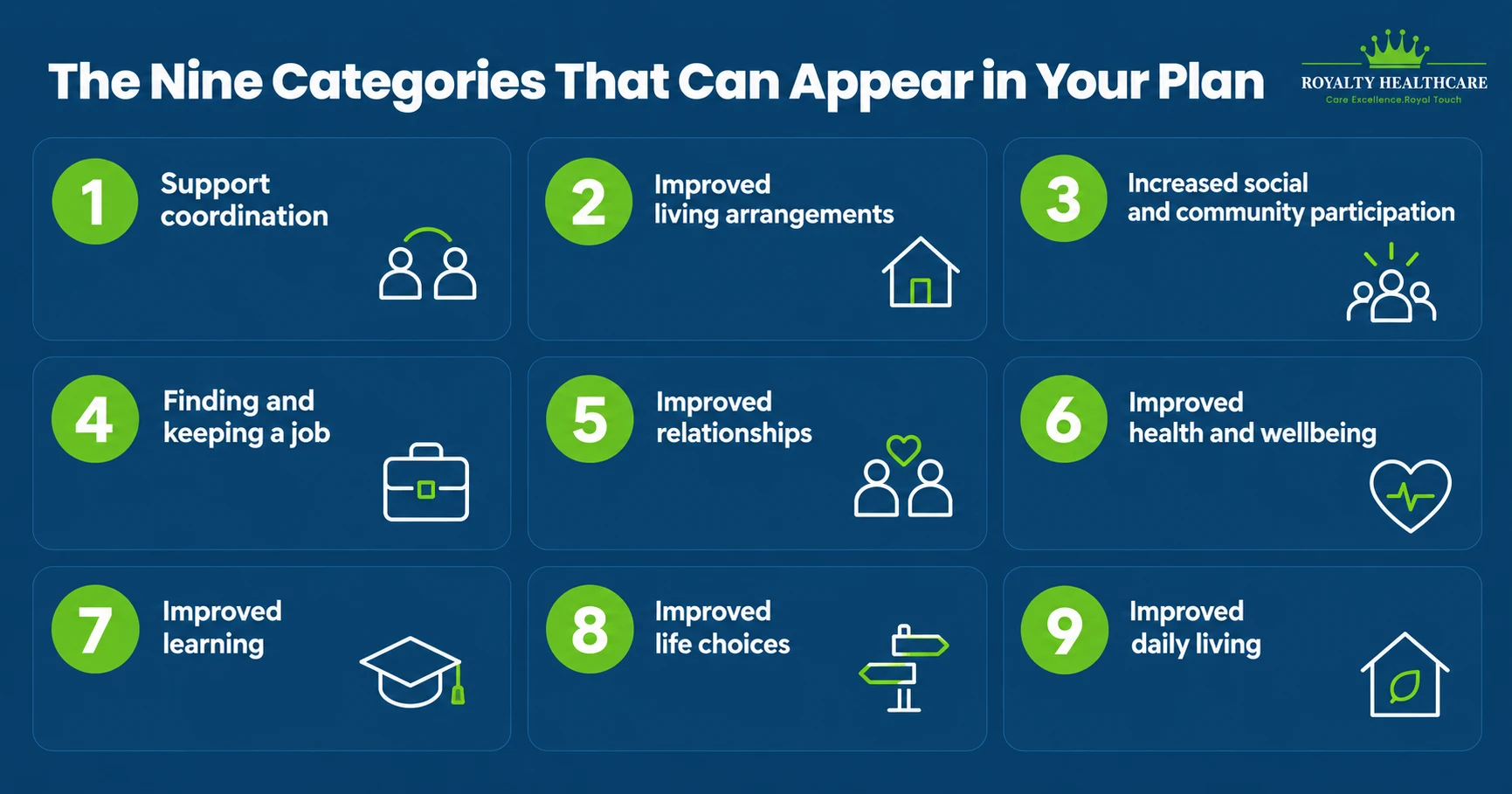
The Nine Categories That Can Appear in Your Plan
Your capacity building budget can hold funding in up to nine support categories. You will only see the ones linked to your goals, so your plan may include two or three rather than all nine.
1. Support coordination
Usually funded for a limited time, a support coordinator helps you understand your plan, connect with providers and grow confident enough to manage more of it yourself. The aim is to build your own ability to coordinate supports over time.
2. Improved living arrangements
This category helps you find and keep a suitable home, for example with support to apply for a rental or prepare for an inspection. Rent and bond payments remain your own responsibility.
3. Increased social and community participation
Funding here helps you find activities that interest you, build social skills and meet people in your area. It is the skill-building side of community participation support.
4. Finding and keeping a job
Working-age participants can use this time-limited support to build work skills, develop a career plan, try work experience or move into work or further study.
5. Improved relationships
This covers behaviour support plans, behaviour supports and social skills development. A qualified practitioner helps you understand triggers and practise new ways to respond.
6. Improved health and wellbeing
This category pays for professionals such as dietitians and exercise physiologists who help you build healthier routines you can maintain on your own.
7. Improved learning
These supports help you move from school into TAFE, university or short courses, including help with applications, study workload and literacy.
8. Improved life choices
This funding builds the financial and organisational skills needed to manage your plan, and it pays for a plan manager if you have one. Over time, it can help you take on more of your plan’s day-to-day decisions.
9. Improved daily living
For many participants, this is where everyday independence is built most directly. Capacity building improved daily living funding covers assessments, training and therapies such as occupational therapy and speech therapy, along with skill-building programs like our life skills development support.
Everyday Skills That Lead to Real Independence
Categories describe how funding is organised. What matters in daily life is the skills they build. These are the areas where we most often see capacity building make a practical difference.
- Personal care routines. Showering, grooming, dressing and oral care are broken into small, repeatable steps. Visual schedules and gentle prompting help, and prompts are reduced as each step becomes familiar, until the routine belongs to you.
- Cooking and household tasks. Participants learn to plan meals, write a shopping list, use appliances safely and keep a simple cleaning schedule. Starting with one reliable meal often builds the confidence to try the next.
- Money management. Budgeting, recognising bills, using a bank card safely and spotting common scams are skills that protect independence. Practice with real receipts and real shopping trips makes the learning stick.
- Travel and getting around. Travel training covers planning a route, reading timetables, tapping on and off public transport, and knowing what to do if a service is late. A support worker travels alongside you at first, then gradually steps back.
- Communication and self-advocacy. Speech therapy, communication devices and role-play help participants make phone calls, ask questions at appointments and speak up about their own care.
- Social connection. Funding under capacity building increased social and community participation can help you join a club, sporting group or class, and build the social skills to keep friendships going outside of paid support.
- Coping and emotional wellbeing. Strategies for managing stress, anxiety or change support every other skill on this list. Trauma-informed mental health support can work alongside skill-building where needed.
The common thread is fading support. Good capacity building starts with whatever help is needed, then reduces that help as skills grow.
Making Your Funding Work Harder
Capacity building delivers the best results when it is planned around clear goals and reviewed regularly. A few habits make a noticeable difference.
Start with specific goals. “Become more independent” is a good aim, but “catch the bus to my day program on my own” gives everyone something concrete to work towards and measure.
Choose providers who track progress. Ask how skills will be measured, how often you will receive updates, and when support will begin to reduce. A provider focused on independence should be comfortable with these questions.
Keep records along the way. Progress notes and therapy reports become valuable evidence at a plan check-in or reassessment. They show what your NDIS capacity building funding achieved and help justify the supports you need next.
Finally, connect your budgets. Capacity building works best alongside your core supports, so the skills practised in a therapy session are reinforced by your support workers every day.
How Royalty Healthcare Helps Participants Build Independence
Royalty Healthcare (ABN 35 654 251 519) is a registered NDIS provider in Brisbane, certified by the NDIS Quality and Safeguards Commission and supporting participants since 2019. From our office at 5/481 Gympie Road, Strathpine, our team delivers support across Brisbane, Ipswich, Logan, the Gold Coast and the Sunshine Coast.
Our approach to capacity building is hands-on and goal-driven. Skills are taught in your own home for comfort and familiarity, then practised out in the community where they will actually be used. Support workers guide, demonstrate and encourage, and step back as your confidence grows.
Because our support workers, nurses, behaviour support practitioners and coordinators work as one team, skill-building connects naturally with the rest of your NDIS support services. For participants preparing for a bigger move, short-term accommodation offers a chance to try more independent living, and Supported Independent Living provides daily support in a shared home built around your routine.
We work with self-managed, plan-managed and NDIA-managed participants, and every worker holds a current NDIS Worker Screening Check.
Building Independence, One Skill at a Time
Independence is not about doing everything alone. It is about having the skills and confidence to make your own choices, and knowing which support you want and when. Capacity building supports give you the time, training and expert guidance to get there, at a pace that suits you.
If you would like to understand how your plan’s capacity building funding could be used, or you are ready to start working towards a new goal, contact our team or call 1800 467 692 for a friendly, no-pressure conversation.
This article provides general information about the NDIS and is not personal, legal or financial advice. NDIS rules and funding arrangements are being updated under new legislation, so always check current information at ndis.gov.au or speak with the NDIA about your individual plan.