


NDIS Respite (STA): New Rules and How to Make the Most of Your Stay
Taking a break from everyday routines can benefit both people living with disability and the family members who support them. For NDIS participants who rely on significant daily assistance from unpaid carers, Short-Term Accommodation (STA) can provide temporary support while their usual carers take a much-needed break.
However, recent changes to NDIS respite rules have created important questions. Who qualifies for STA? What expenses does the NDIS cover? Can you still use respite funding for meals and recreational activities?
With updated funding rules and pricing arrangements introduced in 2026, understanding these details is essential before organising a stay.
This guide explains the latest NDIS STA rules and shares practical ways to make your respite experience comfortable, meaningful and aligned with your NDIS plan.
What Is NDIS Respite (STA)?
NDIS Short-Term Accommodation (STA) provides temporary disability-related support when a participant spends time apart from their usual informal carers.
The purpose is to give family members or other primary unpaid carers a short break from their caring responsibilities while ensuring the participant continues receiving appropriate support.
Depending on individual needs and funding arrangements, STA may include:
- Assistance with personal care, dressing and hygiene.
- Support with daily living routines.
- Suitable short-term accommodation.
- Overnight disability support where required.
- Assistance to maintain familiar routines and independence.
STA is primarily intended to sustain existing informal care arrangements rather than fund holidays or replace permanent housing.
Participants exploring temporary support in South-East Queensland can learn more about Royalty Healthcare’s Short-Term Accommodation services.
What Are the New NDIS Respite Rules in 2026?
The NDIS has updated its terminology, funding guidance and pricing arrangements for short-term stays.
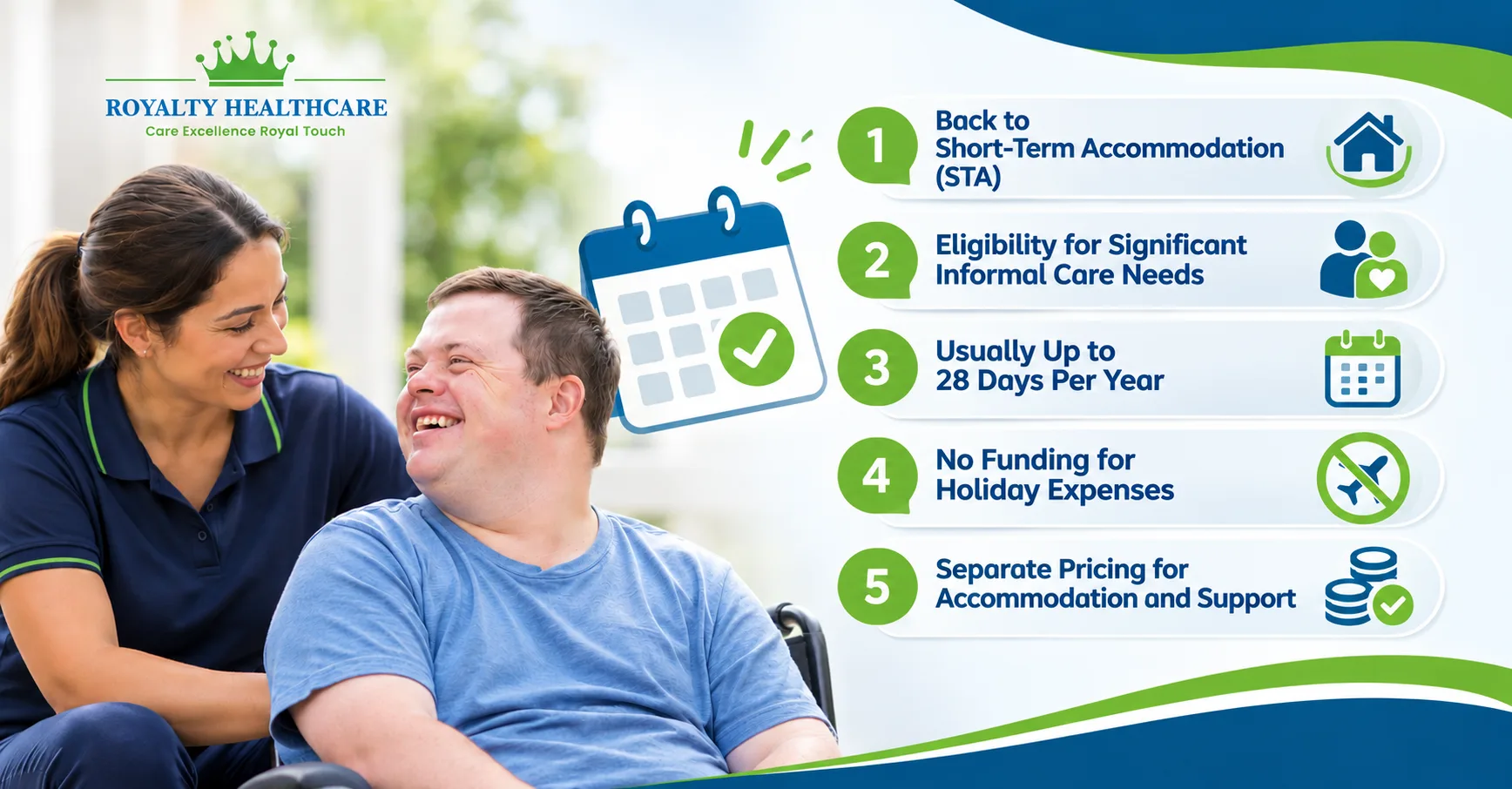
Here are the changes participants and families should understand.
1. Short-Term Accommodation Is Again Called STA
In October 2025, the National Disability Insurance Agency (NDIA) renamed Short-Term Accommodation to Short-Term Respite (STR).
Following community feedback, the agency returned to the term Short-Term Accommodation (STA) in 2026.
Although the terminology changed, the central purpose remains supporting participants during a temporary break from their primary informal carers.
2. Eligibility Focuses on Significant Informal Care Needs
STA funding is not automatically available to every NDIS participant.
Under current NDIS guidance, you may be eligible if you:
- Live with your primary informal supports or receive daily drop-in assistance from them.
- Receive more than six hours of disability-related support per day from your primary informal support.
- Need temporary alternative support so your usual carers can take a break.
The NDIA considers individual circumstances, existing support arrangements and whether STA represents a reasonable and necessary disability support.
For participants under 18, the agency also considers whether their disability-related needs exceed typical parental responsibilities.
3. STA Is Usually Limited to 28 Days Per Year
Eligible participants are generally funded for up to 28 days of Short-Term Accommodation annually, with stays of up to 14 consecutive days.
This funding can be used flexibly according to individual needs.
For example, a participant might arrange occasional weekend stays rather than using their allocation in one extended period.
However, the number of funded days depends on the participant’s approved NDIS plan. Having an NDIS plan does not automatically provide an entitlement to 28 STA days.
4. STA Funding No Longer Covers Everyday Holiday Expenses
One significant area of clarification concerns what participants can claim.
Under the updated rules, NDIS funding may cover disability-related assistance and eligible standard accommodation.
However, participants cannot use STA funding to pay for:
- Holiday packages, cruises or holiday accommodation.
- Airfares and personal travel insurance.
- Food, groceries and meals.
- Entertainment tickets and recreational entry fees.
- Accommodation or travel costs associated with a family holiday.
Important: Standard accommodation needed for approved respite is different from holiday accommodation purchased for leisure.
Participants should clarify any personal expenses before confirming their stay.
5. STA Pricing Now Separates Accommodation and Support Costs
The 2026 NDIS pricing changes replaced the previous bundled approach with more clearly separated components.
The revised structure distinguishes accommodation costs from disability support worker services. Support worker claims can reflect the actual hours delivered, timing and intensity of assistance.
This helps participants understand what services they are paying for.
Before booking, request an itemised explanation of expected charges and check the current NDIS pricing arrangements.
Where Can You Use NDIS Short-Term Accommodation?
STA is not limited to traditional respite centres.
Depending on the participant’s needs, approved arrangements may include:
- Shared respite accommodation.
- Individual short-term accommodation.
- Suitable hotels, motels or other standard accommodation.
- Support provided in the participant’s own home, where appropriate.
The NDIS generally expects STA funding to be used within the participant’s home state or territory, although exceptions may be considered for people living in remote areas.
The most suitable environment is one where the participant’s accessibility, personal care requirements and regular routines can be maintained.
How to Make the Most of Your NDIS Respite Stay
A successful respite experience involves more than finding somewhere to stay. Careful preparation helps participants feel comfortable while allowing carers to use their break confidently.
1. Check Your NDIS Plan Before Booking
Review your approved funding and confirm whether STA is included.
Discuss your options with your my NDIS contact, support coordinator or plan manager if you are unsure.
If circumstances have changed and your plan does not contain the support you need, you can discuss requesting a plan change.
For broader guidance, explore Royalty Healthcare’s article on maximising your NDIS plan.
2. Choose Accommodation That Matches Your Needs
Before selecting a provider, consider accessibility and the support environment.
Ask whether the accommodation has suitable bathrooms, mobility access, sleeping arrangements and any equipment you require.
Also confirm whether the provider can arrange staff with the experience and qualifications needed for your individual support requirements.
3. Prepare a Personal Support Plan
Sharing information before your stay helps maintain continuity of care.
Your preparation checklist should include:
- Medication details and administration requirements.
- Dietary preferences and allergies.
- Personal care routines and mobility needs.
- Communication preferences.
- Emergency contacts and relevant health information.
- Behaviour support arrangements, where applicable.
- Assistive technology and equipment requirements.
A clear handover helps support workers understand your preferences and provide consistent assistance.
4. Maintain Familiar Routines
A new environment can feel unfamiliar, particularly for participants who value predictability.
Consider maintaining familiar meal times, bedtime routines, personal interests and communication methods.
Bringing preferred personal items, where appropriate, may also help create a comfortable experience.
5. Use the Opportunity to Practise Everyday Skills
A respite stay may create opportunities to practise existing skills in a different environment.
Depending on individual interests and support needs, these might include preparing simple meals, organising belongings or making everyday choices.
Any separately funded capacity-building activities must be consistent with the participant’s plan and the relevant NDIS funding rules.
For further information, read Royalty Healthcare’s guide to NDIS life skills development.
6. Clarify Costs and Booking Conditions
Before signing a service agreement, ask your provider:
- Which services are included in the proposed charges?
- What personal expenses will you need to pay?
- How will support worker hours be recorded?
- Are there cancellation or notice requirements?
- How will the provider manage changes to your support needs?
Confirming these details early can prevent unexpected expenses and confusion.
Common Mistakes to Avoid When Planning STA
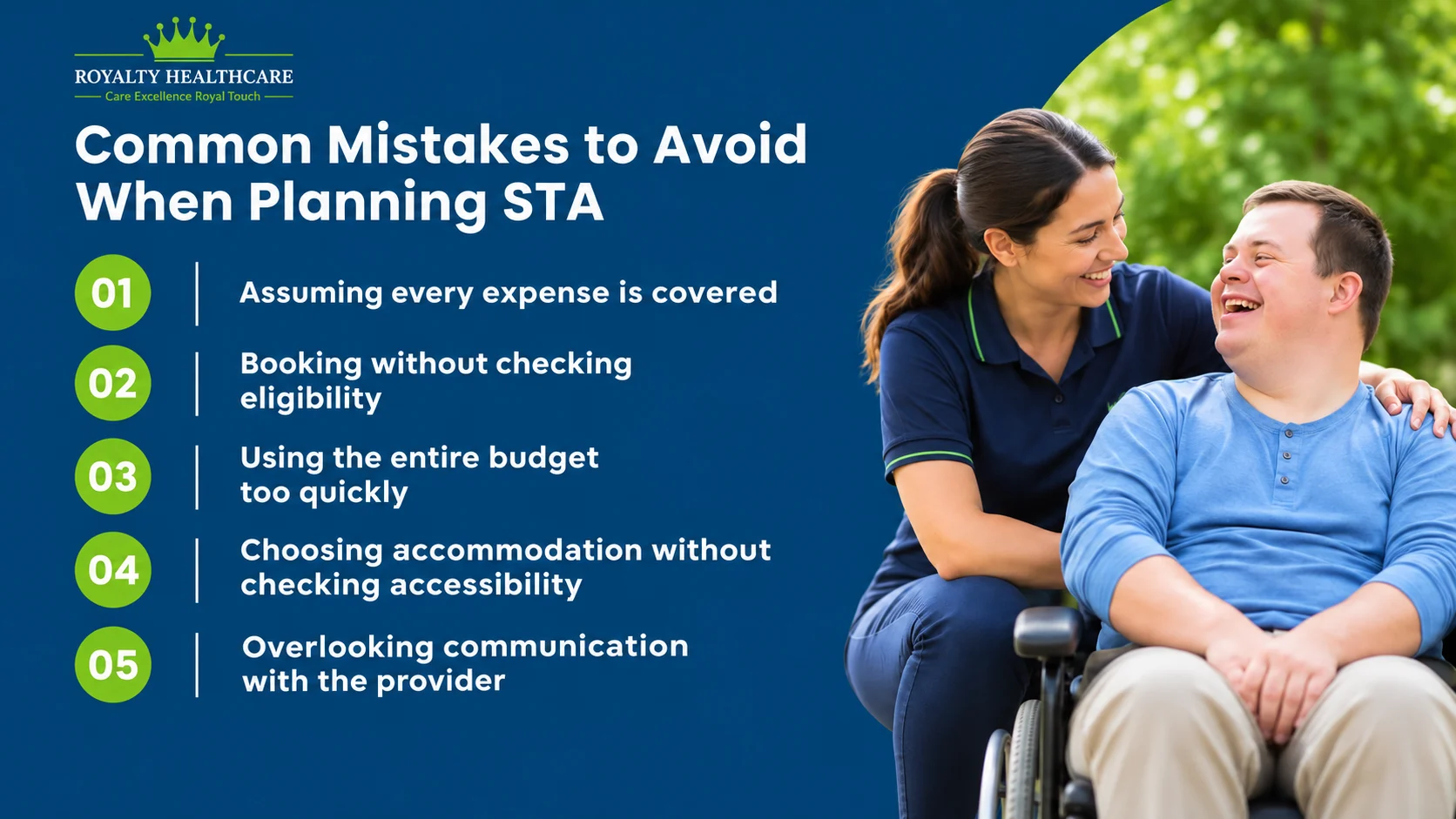
Even with approved funding, a few mistakes can create unnecessary difficulties.
- Assuming every expense is covered: Meals, entertainment and holiday-related costs are generally personal expenses, not NDIS-funded STA supports.
- Booking without checking eligibility: Always confirm your individual funding arrangements before making commitments.
- Using the entire budget too quickly: Consider how respite might be needed throughout your plan period.
- Choosing accommodation without checking accessibility: The setting must be suitable for your actual disability support needs.
- Overlooking communication: Share relevant routines and support instructions with the provider before arrival.
Planning ahead can help ensure respite remains beneficial for both participants and their primary carers.
How Royalty Healthcare Supports Your Respite Experience
At Royalty Healthcare, we believe temporary support should respect each participant’s independence, dignity and personal preferences.
As a registered NDIS provider, we offer personalised short-term accommodation and respite support across Brisbane, Ipswich, Logan, the Gold Coast and the Sunshine Coast.
Our team works with participants, families and support coordinators to understand individual care needs, maintain established routines and plan suitable short-term support arrangements.
Whether you are arranging a planned carer break or exploring appropriate respite options, our focus is on helping you feel supported and informed.