
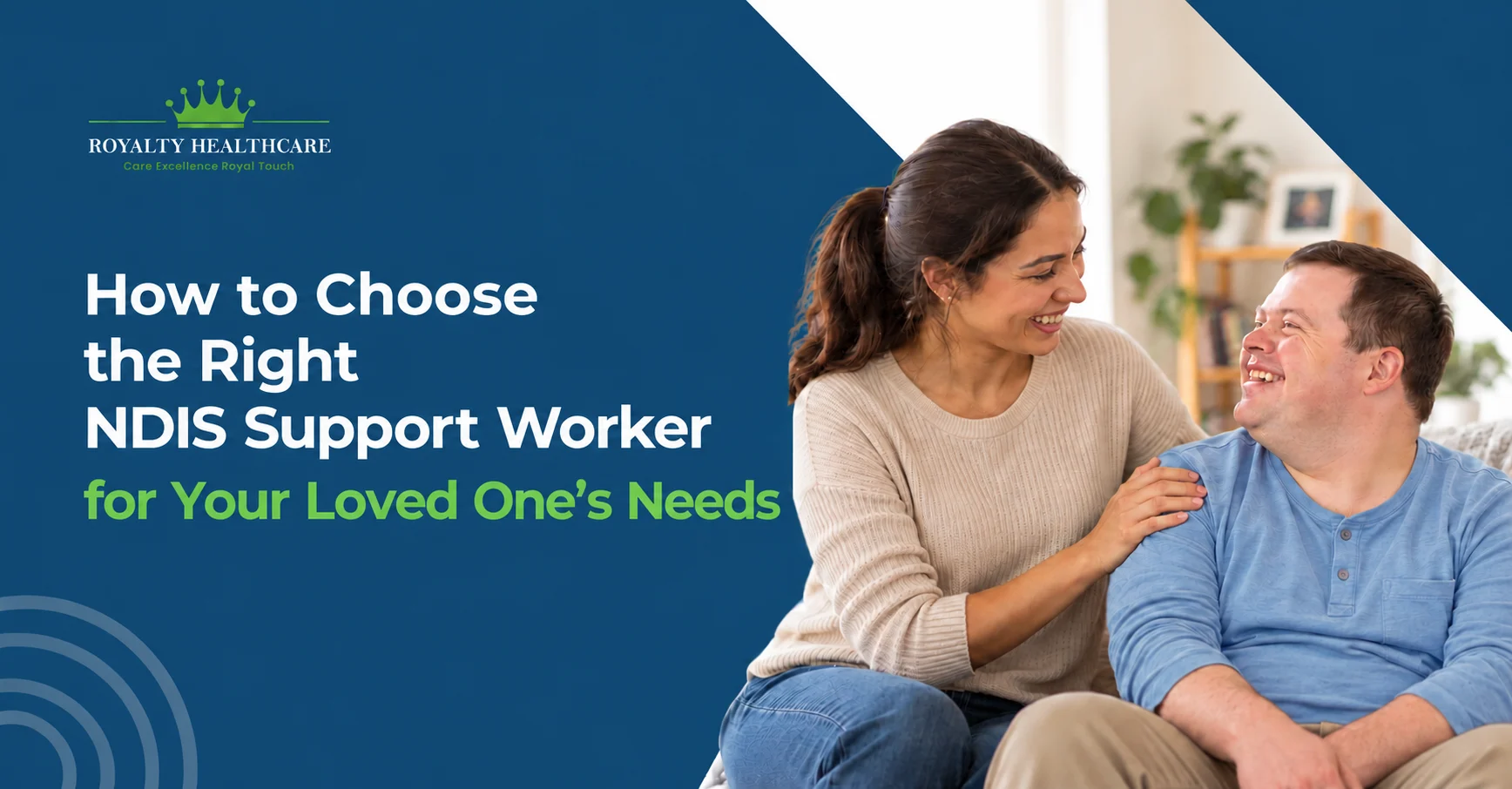
How to Choose the Right NDIS Support Worker for Your Loved One’s Needs
The person who walks through the front door each morning shapes more of daily life than any line in an NDIS plan. They help with the shower, notice when a mood has dipped, drive to the Tuesday swimming class, and know which mug is the favourite. When that relationship works, the plan comes to life. When it doesn’t, even generous funding can feel like it is going nowhere.
For families, choosing that person can feel like a big leap of trust. You are inviting someone into your home and into the life of someone you love. This guide walks through a practical way to make that choice: understanding what your loved one actually needs, checking the essentials, asking the right questions, and knowing what to do if the match isn’t right.
Why the Person Matters More Than the Paperwork
Qualifications and clearances are the starting line, not the finish. Two workers with identical certificates can deliver very different days. One rushes through tasks on a checklist; the other builds skills, encourages choice and treats the participant as the one in charge.
A good NDIS support worker works alongside the participant, not around them. They follow the goals in the plan, respect the person’s preferences and routines, and know when to step back so independence can grow. That is why the decision deserves more care than simply accepting whoever is available on the roster.
Consistency matters too. People with autism, intellectual disability or psychosocial disability often do best with familiar faces and predictable routines. A revolving door of new workers can undo months of progress, so it is worth asking any provider how they keep teams stable.
Start With a Clear Picture of Daily Life
Before you meet a single candidate, map out what good support needs to look like. This step makes every later conversation sharper and helps the provider suggest the right people.
- The tasks that need doing. List the practical supports by time of day: personal care in the morning, meal preparation, medication prompts, transport, community outings. Be specific. “Help in the kitchen” is vague; “support to cook two simple meals a week independently” gives a worker something to aim for.
- The goals in the NDIS plan. Your loved one’s plan sets out goals such as building life skills, joining community activities or living more independently. A worker who understands those goals can turn routine tasks into progress. Services such as life skills development and community participation work best when the worker knows the bigger picture.
- Health and clinical needs. If there is epilepsy, a PEG feed, diabetes, or bowel care, the worker will need specific training, and some tasks may need oversight from a nurse. Families supporting someone with high-intensity needs can learn more about complex care support and how it is delivered safely.
- Communication style. Does your loved one use speech, a device, signs or gestures? Do they need time to process questions? A worker should be willing to learn how this person communicates, not expect the person to adapt to them.
- Personality, culture and interests. Shared language, cultural background, or interests can make support feel natural. Some people prefer a quiet, calm worker; others enjoy someone chatty and energetic. Some have a clear preference about the gender of the worker who helps with personal care. These preferences are valid and worth stating clearly.
- Behaviours of concern. If there are triggers or a behaviour support plan, the worker must understand and follow it. Ask whether staff have been trained in positive approaches and how they work with behaviour support practitioners.
Write this down as a one-page profile. Many families find it the single most useful tool when talking to providers.
Checks Every Worker Should Pass Before the First Shift
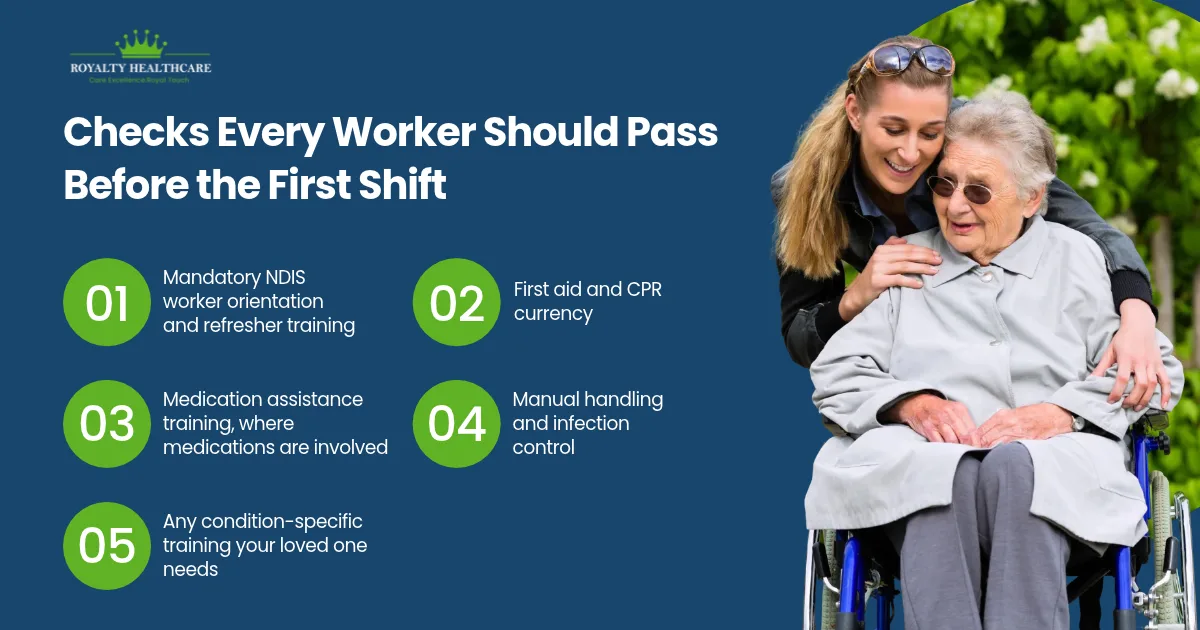
Some safeguards are non-negotiable. Workers in risk-assessed roles with a registered NDIS provider must hold an NDIS Worker Screening Check clearance. In Queensland, applications are handled through the state’s worker screening service.
Every worker funded through the NDIS is also bound by the NDIS Code of Conduct, set by the NDIS Quality and Safeguards Commission. It requires workers to respect people’s rights, privacy and choices, to provide support safely and competently, and to raise concerns about anything that could harm a participant.
Beyond those essentials, ask about:
- Mandatory NDIS worker orientation and refresher training
- First aid and CPR currency
- Medication assistance training, where medications are involved
- Manual handling and infection control
- Any condition-specific training your loved one needs
A reputable provider will answer these questions openly. If they hesitate, treat that as information. You can also confirm a provider’s registration through the NDIS find a registered provider tool.
Questions Worth Asking at the First Meeting
A meet-and-greet before support begins is one of the best ways to judge fit. Involve your loved one as much as possible; their reaction often tells you more than any answer. These questions help draw out how a worker really thinks.
- “How would you support someone to do this themselves?” Pick a task from your profile, such as making breakfast. Listen for words like encourage, prompt, and step back. A worker who jumps straight to “I’d just do it for them” may be kind, but they will not build independence.
- “Tell me about a time a shift didn’t go to plan.” Real experience shows in real stories. You want to hear how they stayed calm, kept the person safe, and communicated afterwards, not a polished promise that nothing ever goes wrong.
- “How do you learn someone’s communication style?” Good answers include spending time observing, asking family, reading the support plan, and checking understanding often. This matters most when the participant has limited speech.
- “What would you do if you noticed something was wrong?” Whether it is a health change, an injury, or a sign of distress, the worker should describe clear steps: keep the person safe, report to the supervisor, record it, and follow the provider’s incident process.
- “How do you keep notes and keep the family informed?” Shift notes are how progress gets tracked against plan goals. Ask how often you will hear updates and how you can raise concerns between shifts.
- “What do you enjoy about this work?” It sounds simple, but genuine motivation shows. People who care about the work tend to stay longer, which supports the consistency your loved one needs.
After the meeting, ask your loved one how they felt. Comfort, ease, and a sense of being listened to are strong signs of a good match.
Warning Signs That the Match Isn’t Working
Even with careful choice, some matches don’t work out. That is not a failure; it is part of finding the right fit. Watch for:
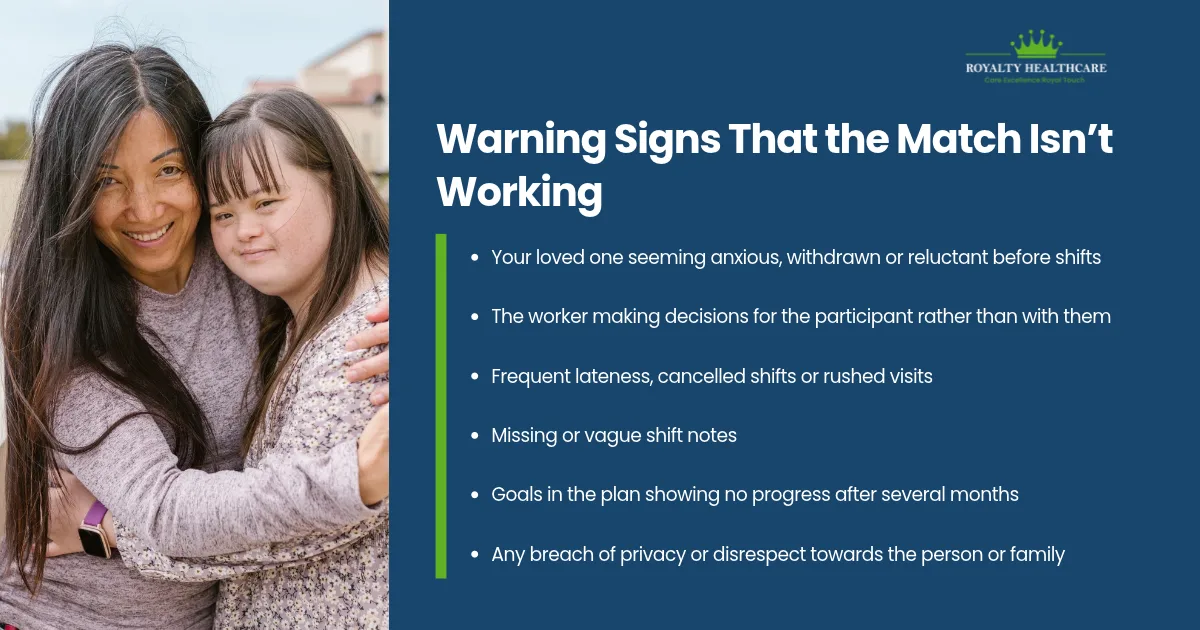
- Your loved one seeming anxious, withdrawn or reluctant before shifts
- The worker making decisions for the participant rather than with them
- Frequent lateness, cancelled shifts or rushed visits
- Missing or vague shift notes
- Goals in the plan showing no progress after several months
- Any breach of privacy or disrespect towards the person or family
Raise concerns with the provider early. A good provider will listen, offer a different worker if needed, and adjust the support. If a serious concern isn’t resolved, participants and families can make a complaint to the NDIS Quality and Safeguards Commission.
Making the Partnership Last
The best support relationships are built over time. A few habits help:
- Share the one-page profile with every new worker, and update it as needs change.
- Plan a review after the first month and again at three months to check what is working.
- Celebrate small wins, such as the first bus trip alone or a meal cooked independently, so the worker sees the impact of their effort.
- Keep the participant at the centre of every conversation about their support.
If your loved one’s plan includes support coordination, the coordinator can help you compare providers and keep the arrangement on track. Our guide to NDIS support coordination explains how that role works.
Support Across South East Queensland
Royalty Healthcare is a registered NDIS provider with more than ten years of experience supporting people with disability across Brisbane, Ipswich, Logan, the Gold Coast and the Sunshine Coast. Our person-centred approach is guided by respect, compassion, empowerment, integrity and inclusion.
Families looking for a disability support worker Brisbane participants can rely on are welcome to talk with our team about their loved one’s needs and goals. Our NDIS support services Brisbane families use include help with personal activities, daily tasks and shared living, household skills and travel to appointments and community activities.
This article provides general information only and is not a substitute for advice about an individual NDIS plan. Funding, eligibility and screening requirements can change, so please check current details with the NDIA, the NDIS Quality and Safeguards Commission or your support coordinator.