
Building Life Skills with the NDIS: From Cooking to Catching the Bus
Independence is usually built in small, ordinary moments. Making toast without someone standing over the kettle. Knowing which bus goes to the shopping centre, and what to do when it doesn’t turn up. For many people with disability, these moments are where real confidence starts.
That is the purpose of NDIS life skills support: teaching a person to do something themselves, rather than having it done for them. The difference is easy to say and harder to deliver well. Good support has a plan, a pace and an end point where the worker steps back.
This guide follows two common goals from start to finish: cooking a meal at home and travelling independently by public transport. Along the way it explains where the funding sits in a plan, how skills are taught and gradually handed over, and how to show progress at your next plan reassessment. It is written for participants, families and support coordinators across South East Queensland.
At Royalty Healthcare, cooking and travel training are both core parts of the life skills support our Brisbane team delivers, and they show clearly how a supported task becomes a solo one.
Where the Funding Fits in Your Plan
Skill-building supports are usually funded from the capacity building budget, not the core budget. Core supports pay for help with tasks you need done now. Capacity building pays for the training, assessment and practice that help you do more yourself over time. The NDIS explains this split on its capacity building supports page.
In practice, cooking and household skills are often linked to the Improved Daily Living Skills category, while learning to get around the community may connect to community participation goals. How your funding is listed, and whether it is flexible or stated, depends on your individual plan.
Three things help the funding go further.
Start with clear goals. “Cook three dinners a week on my own” gives a support team something specific to teach towards, while “be more independent” does not. Next, check your plan management type, because each option affects which providers you can use. Our guide to how NDIS plan management gives you more choice explains the differences.
Finally, if several providers are involved, a support coordinator can keep everyone working towards the same goals. Learn more about what NDIS support coordination involves.
For a deeper look at the budget categories themselves, read how NDIS capacity building supports improve everyday independence.
In the Kitchen and Around the Home: What Gets Taught
Cooking looks like one skill, but it is really a chain of smaller ones. Breaking it into links lets a support worker teach each one properly and spot exactly where a person needs more practice. These are the daily living skills most cooking goals draw on:
- Choosing what to eat. Meal planning starts with the person’s own tastes, cultural foods and budget. Picture menus or a simple weekly planner help someone decide in advance, which reduces stress at dinner time.
- Shopping for ingredients. This covers writing a list, finding items in the supermarket, comparing prices and paying at the checkout. Many participants start with a small shop of five items and build from there.
- Staying safe in the kitchen. Safe use of knives, hot surfaces, kettles and microwaves comes before anything else. So does knowing how to store food, read use-by dates and wash hands at the right moments.
- Following a recipe step by step. Recipes can be rewritten as photo cards, short videos or large-print checklists. The format matters less than whether the person can follow it without a prompt.
- Cleaning up afterwards. Washing dishes, wiping benches and putting food away turn cooking into a complete routine. These habits also lead naturally into laundry, bins night and other household tasks.
- Managing the money behind the meal. Setting a weekly grocery amount and tracking it links the kitchen to wider budgeting skills. It also shows the person the real payoff of cooking at home.
Each link is practised in the participant’s own kitchen wherever possible, because skills learned in a familiar space tend to stick. People living in Supported Independent Living in Brisbane can practise these skills daily with consistent staff. A stay in short term accommodation can also be a low-pressure way to try running a household for a few days.
Out the Front Door: Learning to Catch the Bus
When families look into travel training NDIS options, they are usually picturing one specific trip: to work, TAFE, a day program or a friend’s place. Training is built around that real route first, then widened to new ones. A typical program covers:
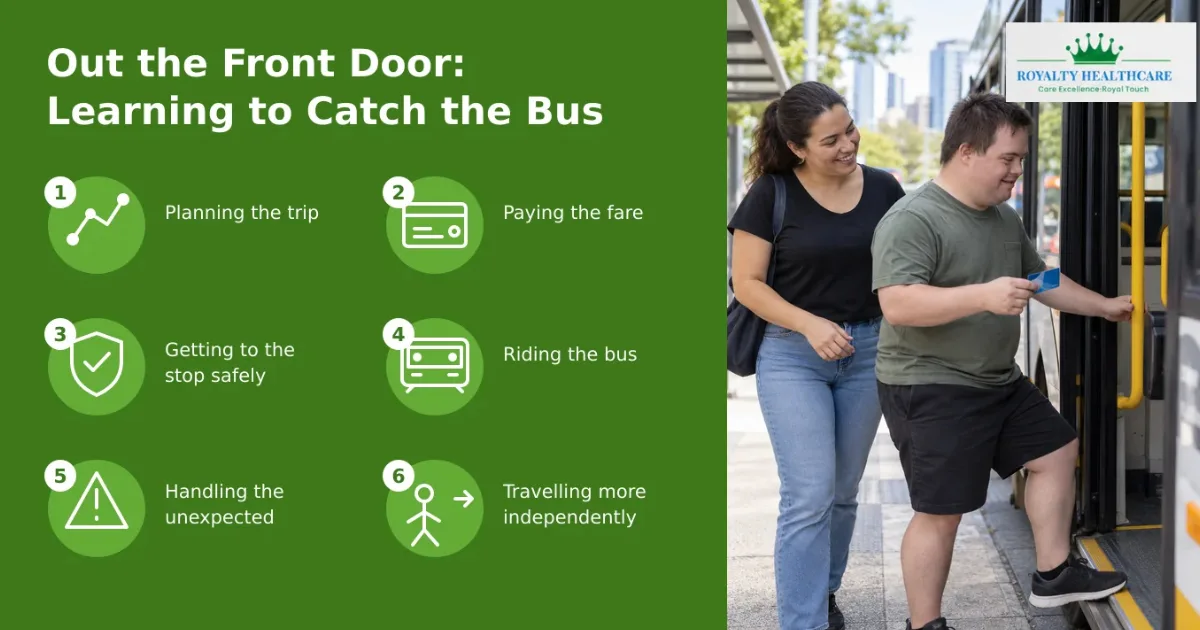
- Planning the trip. The participant learns to check times and stops using the Translink journey planner or app. They also learn to allow extra time, so a late bus doesn’t turn into a crisis.
- Paying the fare. This means topping up and tapping a go card or bank card on and off. People with a significant permanent disability who can travel independently but cannot tap may be eligible for the Translink Access Pass, which needs a health professional’s assessment.
- Getting to the stop safely. Road crossing, choosing a safe path and using landmarks such as a café or a bright sign are practised on foot. Landmarks are often more reliable than street names for remembering a route.
- Riding the bus. Skills include checking the route number, greeting the driver, finding a seat or priority space and knowing when to press the stop button. Counting stops or watching for a landmark helps with getting off at the right place.
- Handling the unexpected. Missed buses, detours and feeling lost are rehearsed on purpose. The participant learns to stay calm, ask the driver or station staff, call Translink on 13 12 30, or ring a saved contact.
- Travelling more independently. Support fades in planned steps: the worker sits further away, then travels on a different part of the bus, then simply meets the person at the destination. Each step happens only when the last one feels easy.
Once someone can travel on their own, a whole new set of goals opens up. NDIS community participation supports can then help them use that freedom for social activities, sport, volunteering or work.
How a Skill Goes From Supported to Solo
Whether the goal is a stir-fry or a bus trip, good development life skills NDIS programs tend to follow the same arc. They start by watching what the person can already do, then teach only the gaps.
The first step is a simple task breakdown, listing every small action in order. The worker then decides how much help each action needs: doing it together, showing it, a spoken hint, or just a gesture. Over the following weeks, those prompts are deliberately reduced. Some teams use backward chaining, where the person completes the final step first, such as plating up, so every session ends with a success.
Just as important is the dignity of risk. People learn by trying, and occasionally getting it a little wrong, in a safe setting. Research by the NDIA and Scope into home and living supports found that active support, and being supported to take reasonable risks, helped participants learn and grow in confidence. You can read the findings in the Having a go research report.
Where behaviours of concern make new routines harder, skill-building often works best alongside positive behaviour support, so strategies stay consistent across the day.
Knowing It’s Working: Tracking Progress Before Your Plan Reassessment
Progress should be visible, not just felt. Ask your provider to record which steps a person now completes alone, how many prompts they need and how often the skill is used in everyday life. Short notes, photos of a finished meal or a log of solo trips all tell a clear story.
This evidence matters at plan reassessment. It shows the NDIA what the funding achieved and supports a case for the next goal, whether that is cooking for friends or catching a train to a new job. Participants and families should be part of reviewing it, so the goals stay their own.
Building Everyday Independence With Royalty Healthcare
Royalty Healthcare is a registered NDIS provider based in Strathpine, certified by the NDIS Quality and Safeguards Commission. Our support workers hold current NDIS Worker Screening Checks and are trained in trauma-informed, person-centred practice. We support participants across Brisbane, Ipswich, Logan, the Gold Coast and the Sunshine Coast, and we work with self-managed, plan-managed and NDIA-managed plans.
Our development and life skills support is delivered at home and out in the community, built around goals you set. Whether you want to cook your first full meal, manage your own shopping or ride the bus to work without a support worker beside you, we will plan the steps with you and step back as your confidence grows.
Ready to talk about your goals? Call our Brisbane team on 1800 467 692 or contact us online for a friendly, no-pressure conversation about what your plan can support.
Disclaimer: This article provides general information only and is not a substitute for advice about your individual NDIS plan. Funding decisions are made by the NDIA based on each participant’s circumstances. Please check current details with the NDIS, Translink or your support coordinator before making decisions.