

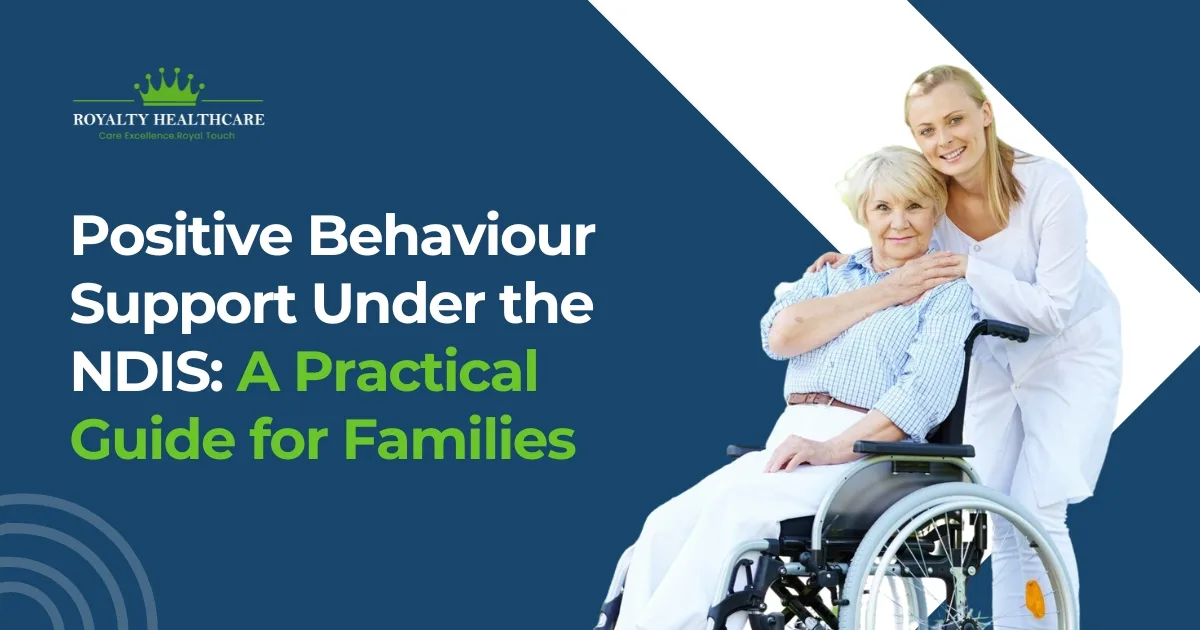
Positive Behaviour Support Under the NDIS: A Practical Guide for Families
Navigating support under the NDIS can feel overwhelming, especially when families are introduced to terms that sound clinical or unfamiliar. One of these is Positive Behaviour Support, often called PBS. For many families, the first question is simple: what does this actually mean in everyday life? The good news is that Positive Behaviour Support is not about punishment, blame, or control. It is about understanding the person, recognising what they may be trying to communicate through their behaviour, and creating better ways to support them. For families, this approach can make daily life more stable, respectful, and manageable.
What Is Positive Behaviour Support?
Positive Behaviour Support is a person-centred approach used to improve quality of life and reduce behaviours that may place the participant or others at risk. It is based on the understanding that behaviour is a form of communication. When a person becomes distressed, withdrawn, aggressive, or overwhelmed, there is usually a reason behind it. That reason might relate to communication difficulties, sensory overload, pain, anxiety, frustration, trauma, or unmet needs.
Rather than reacting only when something goes wrong, PBS looks deeper. It asks important questions. What happened before the behaviour? What is the person trying to express? What changes can be made to help them feel safer, calmer, and more understood? This is what makes PBS a supportive and practical model. It is focused on prevention, not just response.
Why Positive Behaviour Support Matters Under the NDIS
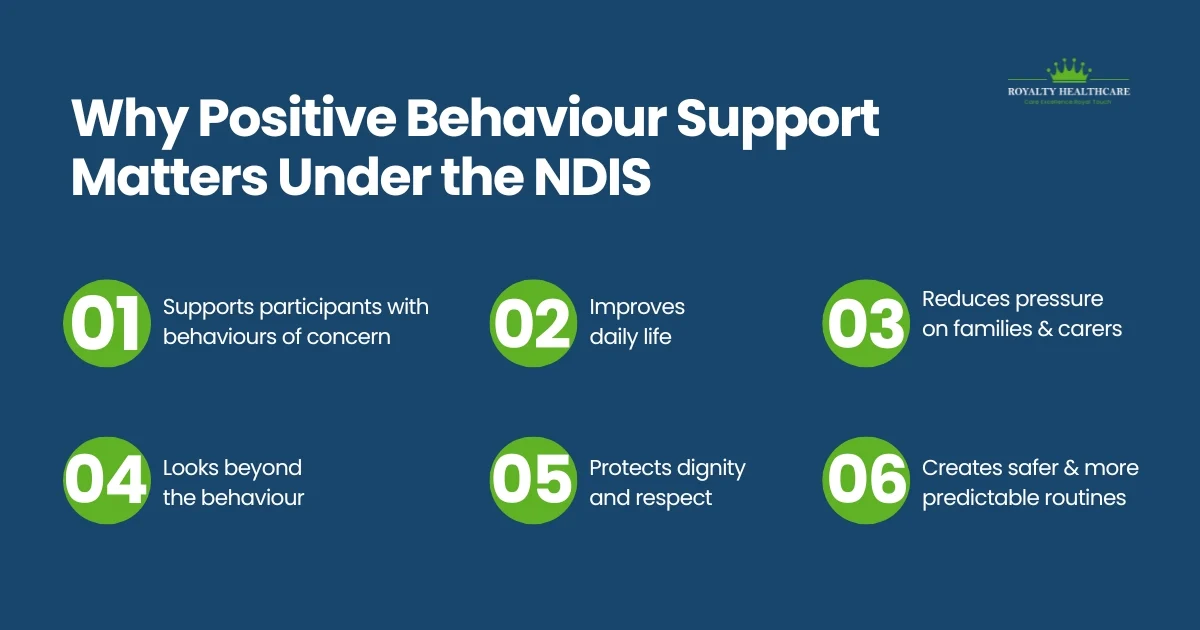
1. Supports participants with behaviours of concern
Positive Behaviour Support helps participants who may show behaviours linked to stress, frustration, communication difficulties, sensory overload, or unmet needs.
2. Improves daily life
These behaviours can affect routines, learning, relationships, community participation, and overall wellbeing. PBS helps make everyday life more manageable.
3. Reduces pressure on families and carers
Families and carers often feel emotionally exhausted when they do not know how to respond. PBS provides clearer guidance and practical strategies.
4. Looks beyond the behaviour
Instead of judging the person or labelling them as difficult, PBS focuses on understanding the reason behind the behaviour.
5. Protects dignity and respect
PBS promotes a person-centred approach that values the participant’s rights, dignity, and individual needs.
6. Creates safer and more predictable routines
With the right strategies in place, the home and support environment can become more stable, calm, and consistent.
How Positive Behaviour Support Works in Practice
Positive Behaviour Support usually begins with assessment and observation. A behaviour support practitioner works with the participant and the people around them to understand what is happening and why. This may include speaking with family members, support workers, teachers, or other professionals involved in the person’s life.
A key part of this process is called a functional assessment. This means looking at the purpose the behaviour may be serving. For example, a person may be trying to avoid a stressful task, gain attention, communicate discomfort, or respond to an overwhelming environment. Understanding this is essential because the support strategy must match the cause, not just the visible behaviour.
What a Behaviour Support Plan May Include
A Behaviour Support Plan gives families and support teams a clearer way to respond consistently and effectively. It is tailored to the individual and should reflect their needs, preferences, strengths, and goals. No two plans should look exactly the same because every person experiences the world differently.
A good plan may include identified triggers, early warning signs of distress, preferred communication methods, and strategies that help the person feel safe. It may also outline environmental adjustments, such as reducing noise, creating structure, using visual supports, or allowing more time for transitions. These small changes can often make a significant difference.
The Role of Families in Positive Behaviour Support
Families are often the people who know the participant best. They may notice patterns others miss, such as certain routines that help, triggers that cause stress, or subtle signs that the person is becoming overwhelmed. Their insight is incredibly valuable in building a support plan that is realistic and effective.
Family involvement also helps create consistency. When similar strategies are used at home, in the community, and across support settings, participants are more likely to feel secure and understood. This does not mean families need to do everything alone. Instead, it means their voice matters and their lived experience should be respected as part of the support process.
Choosing the Right Support Team
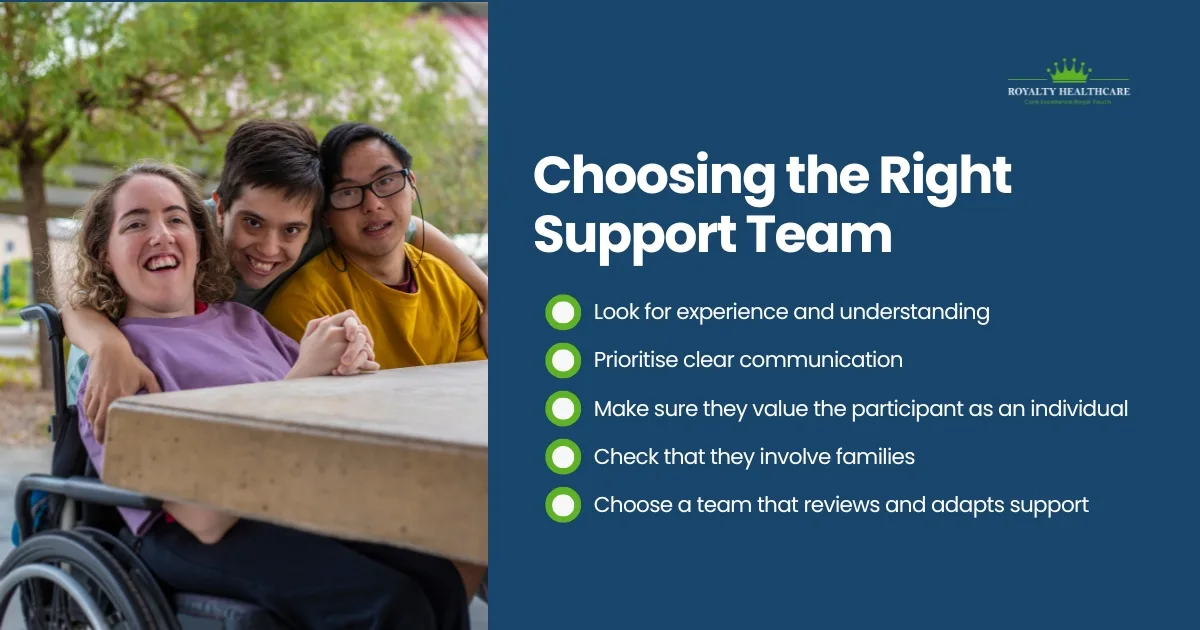
a. Look for experience and understanding
Choose a support team that understands Positive Behaviour Support and can apply it in practical, everyday situations.
b. Prioritise clear communication
The right provider should explain things in a simple way and keep families informed throughout the process.
c. Make sure they value the participant as an individual
Good support should be person-centred and based on the participant’s needs, preferences, and goals.
d. Check that they involve families
A strong support team listens to families and includes their insights when planning and reviewing strategies.
e. Choose a team that reviews and adapts support
Behaviour support should be monitored regularly so strategies can be updated as the participant’s needs change.
When choosing a Positive Behaviour Support provider, families should look for a team that combines professional knowledge with genuine care. Royalty Healthcare presents its Behaviour Support services as evidence-based plans designed to reduce restrictive practices and improve quality of life. The organisation also highlights person-centred progress, transparent communication, and tailored support, which are all important qualities families should consider when selecting the right provider.
How Families Can Support Progress at Home
Positive change often happens through small, steady steps. Families can support progress by keeping routines predictable, noticing what works well, and sharing updates with the broader support team. Even simple observations can be useful. For example, a family may notice that certain environments increase anxiety or that one communication method leads to calmer responses.
Celebrating small wins is also important. Progress is not always dramatic. Sometimes it looks like a smoother morning routine, fewer moments of distress, or better communication during a challenging task. These everyday improvements matter because they build confidence for both the participant and the family.
Patience is essential. PBS is not a quick fix. It is a thoughtful and ongoing approach that focuses on long-term wellbeing rather than short-term control.
Conclusion
Positive Behaviour Support under the NDIS offers families a practical and respectful way to better understand behaviour and encourage meaningful progress. It is centred on improving quality of life, protecting dignity, and creating safer, more positive daily experiences for participants and those around them.
For families, this approach can provide reassurance, clarity, and hope during challenging times. With the right strategies, the right team, and consistent support, Positive Behaviour Support can lead to a more stable and empowering path forward. Royalty Healthcare is committed to delivering person-centred care that supports participants and families with compassion, understanding, and a strong focus on long-term wellbeing.