

Understanding NDIS Autism Supports and How They Make Life Easier
Across Australia, more families and individuals are seeking the right support to manage autism and build meaningful, independent lives. With autism being one of the most commonly funded conditions under the National Disability Insurance Scheme (NDIS), the need for accessible, personalised help has never been more important.
The NDIS plays a crucial role in providing long-term funding and structured services for people with autism. Designed to offer flexibility and choice, the scheme allows participants and families to access therapies, supports, and resources aligned with their individual needs.
In this blog, we explore how the NDIS Autism pathway works, what services are available, and how these supports empower autistic individuals to live confidently and independently. You will also learn how families can maximise the benefits of NDIS support for autism and choose the right provider for ongoing care.
A Simple Guide to Autism
Autism is a developmental condition that affects communication, behaviour, and how individuals experience the world. Each autistic person is unique, with different strengths and support needs. Understanding autism helps families and communities provide the right guidance, create supportive environments, and ensure individuals can learn, grow, and participate confidently in daily life.
What NDIS Covers for Autism
The NDIS provides comprehensive support to people with autism, with funding spread across three key categories: Core Supports, Capacity Building Supports, and Capital Supports. Each category is designed to address different needs and outcomes, ensuring participants receive the right mix of therapies, daily assistance, and developmental programs.
Core Supports include services that help participants with daily activities. This may involve personal care, community access, or support worker assistance. For autistic individuals, core funding can make an immediate difference, especially in managing routines and improving social engagement.
Capacity Building Supports focus on improving functional skills. This is where essential therapies such as speech pathology, occupational therapy, psychology, social skills groups, and behaviour support are funded. These therapies help autistic children and adults develop communication skills, emotional regulation, independence, and confidence.
Capital Supports are used for assistive technology and home modifications. For autism, this may include sensory equipment, communication devices, or safety installations.
It’s also important to understand how the NDIS differentiates between Autism Levels 1, 2, and 3. While the NDIS does not fund based solely on diagnosis, greater functional limitations often result in higher support needs. This ensures that participants at every level receive adequate NDIS services for autism, addressing the unique challenges related to their daily living and long-term development.
NDIS Funding Options for Autism Explained
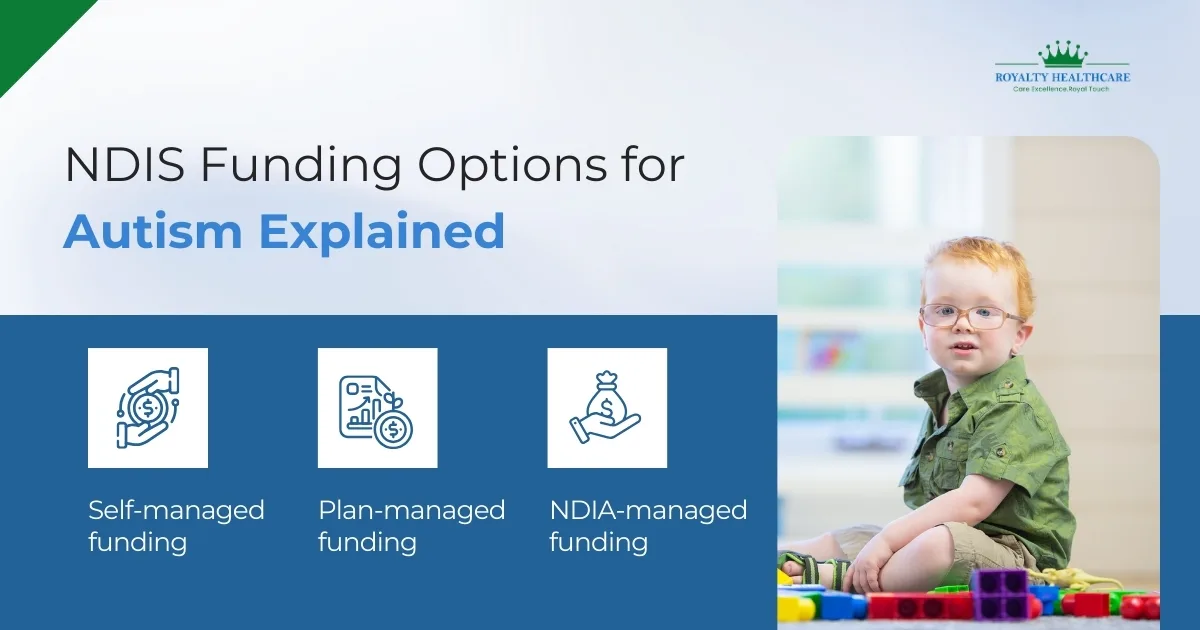
NDIS funding can be managed in three flexible ways: Self-Managed, Plan-Managed, or NDIA-Managed. Each option offers different levels of control and administrative responsibilities.
Self-managed funding allows families or participants to choose any provider (registered or unregistered). This option offers maximum flexibility and control over budgeting.
Plan-managed funding provides support through a Plan Manager who pays invoices, tracks budgets, and ensures compliance. This is ideal for families who want flexibility without full administrative responsibility.
NDIA-managed funding restricts service delivery to NDIS-registered providers only. This option is more structured and ideal for participants wanting a simplified process.
Funding is determined through the NDIS “reasonable and necessary” criteria. This means supports must be directly linked to the participant’s disability, provide measurable benefits, and be value for money. Strong goal setting plays an essential role in securing the right funding for example, communication goals, emotional regulation goals, and independent living goals.
How NDIS Supports Daily Living for Autism
Daily living support is one of the most utilised categories under the NDIS, particularly for autistic individuals who require assistance with routine tasks and independence-building.
“Assistance with Daily Life,” which falls under Core Supports, provides essential help with personal care, household tasks, and community participation. These services are designed not only to complete tasks but to teach and reinforce independent living skills.
Support workers play a valuable role here. Their purpose is not just to “do the tasks” for the participant but to encourage skill-building through guidance, routine structure, and patient support. Activities may include helping the participant get ready for the day, preparing meals, organising daily routines, navigating public transport, or developing social and communication skills.
How to Apply for NDIS Autism Support
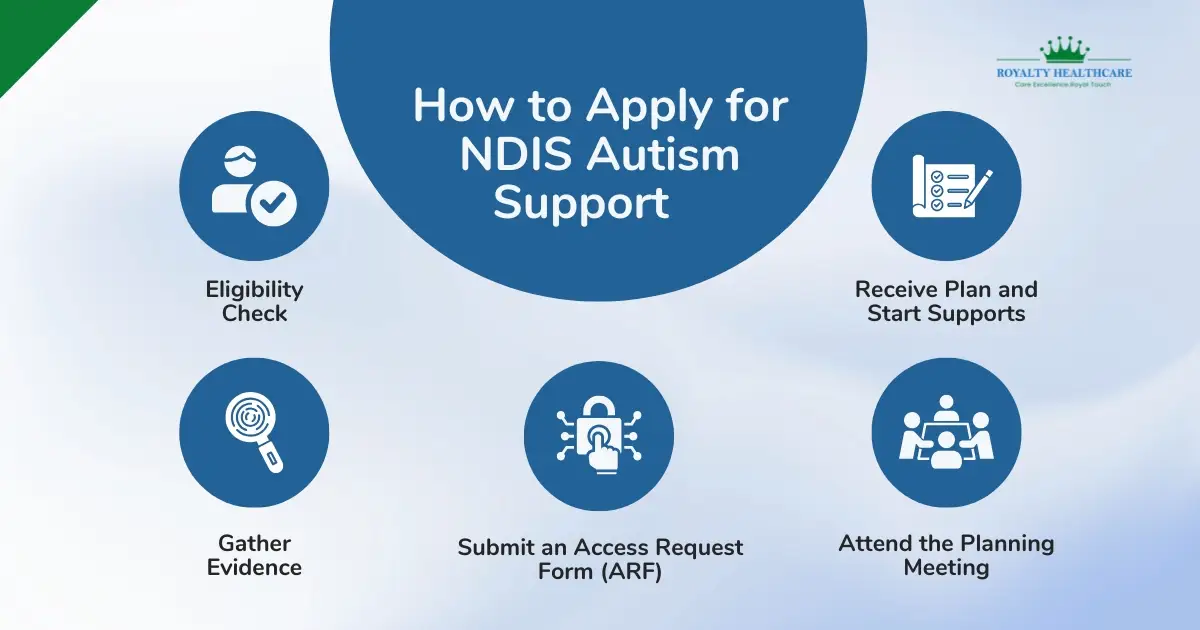
Applying for NDIS support involves a few clear steps, and preparation is key to receiving the right funding.
Step 1: Eligibility Check
Determine whether the individual meets the NDIS disability or early intervention criteria. Autism is typically included, but evidence of functional impact is required.
Step 2: Gather Evidence
This includes diagnostic reports, functional assessments, therapy reports, and GP/paediatrician letters. These documents help the NDIA understand the individual’s support needs.
Step 3: Submit an Access Request Form (ARF)
This can be done via phone or through the form. Include all relevant evidence to avoid delays.
Step 4: Attend the Planning Meeting
This is where goals are discussed. Clear, measurable goals can influence the quality of funding allocated.
Step 5: Receive Plan and Start Supports
Once the plan is approved, participants can begin services.
Once the process is complete, families can begin working with their chosen providers to access personalised therapies, daily living supports, and community-based programs. This step marks the beginning of meaningful progress, helping individuals build confidence, independence, and long-term life skills through the right NDIS autism support.
Why Choose Royalty Healthcare?
Royalty Healthcare is committed to providing compassionate, personalised support to individuals with autism and their families. With a team of experienced support workers and allied health professionals, the organisation delivers high-quality services designed to improve communication, independence, community engagement, and daily living skills.
Royalty Healthcare takes a person-centred approach, ensuring every participant’s goals, preferences, and routines guide the delivery of care. From therapy-linked supports to daily assistance, the team works collaboratively with families to create meaningful progress.
If you’re seeking a provider who understands the complexities of autism and offers tailored support that makes a real difference, Royalty Healthcare is here to help.
Conclusion
The NDIS provides a powerful framework that helps individuals with autism access the supports they need to grow, learn, and live more independently. With the right combination of funding, therapies, daily living assistance, and personalised guidance, participants can build essential skills and achieve meaningful progress. When families understand how the process works from eligibility and evidence to planning and ongoing reviews they are better equipped to make confident decisions about their loved one’s care. With supportive providers and a well-structured NDIS plan, individuals with autism can create a strong foundation for long-term wellbeing, independence, and community participation.