
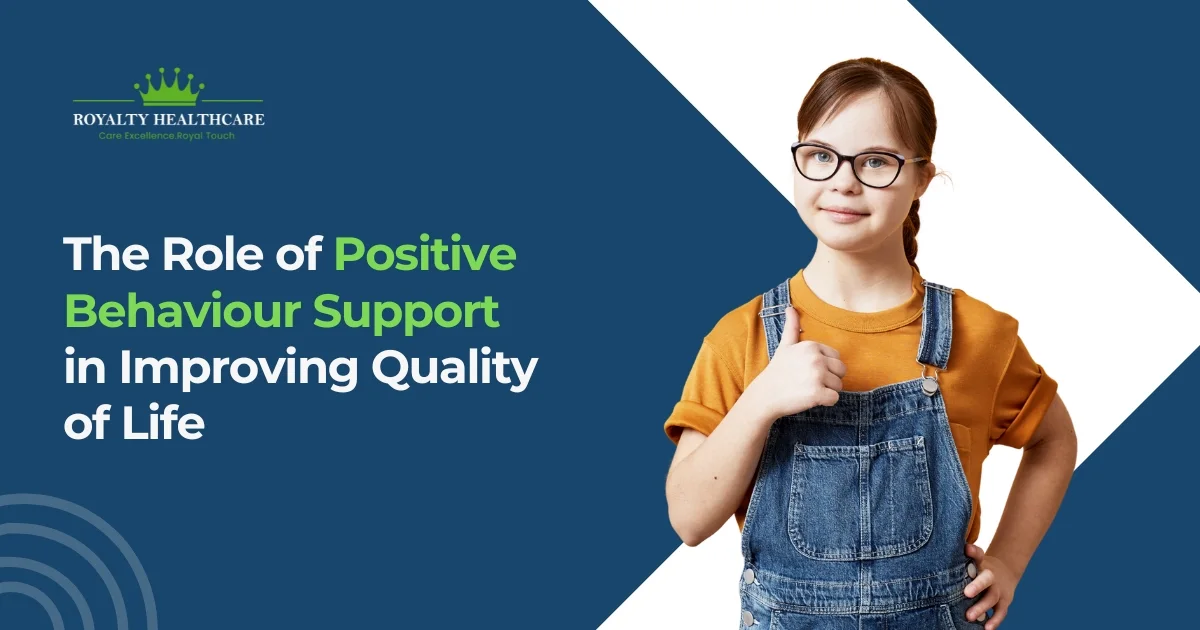
The Role of Positive Behaviour Support in Improving Quality of Life
Across Australia, individuals living with disability often experience behaviours of concern that affect their independence, relationships, and ability to engage meaningfully in daily life. These behaviours are not intentional disruptions but expressions of unmet needs, emotional distress, or communication barriers.
Positive behaviour support (PBS) is a holistic and person-centred approach designed to understand these behaviours and improve quality of life. Rather than relying on restrictive or punitive strategies, PBS focuses on skill development, emotional wellbeing, and environmental adjustments.
Aligned with the values of the National Disability Insurance Scheme (NDIS), PBS empowers individuals to live safer, more confident, and more fulfilling lives.
Understanding Positive Behaviour Support (PBS)
What Is Positive Behaviour Support?
Positive Behaviour Support is an evidence-based, person-centred approach designed to understand why behaviours of concern occur and how to reduce them by addressing the underlying needs of the individual. Instead of reacting to behaviours with punishment or restrictive practices, PBS focuses on proactive strategies that support the person’s emotional, social, and environmental needs. This approach helps people develop new skills, communicate more effectively, and engage in meaningful activities. By improving the person’s overall wellbeing, PBS creates long-term positive change that enhances independence, confidence, and daily functioning.
Core Principles of PBS
PBS is built on strong ethical and practical foundations, including:
- Person-centred and culturally respectful support tailored to the individual’s life and values.
- Strength-based and empowering approaches that highlight abilities rather than limitations.
- Commitment to improving quality of life, not just reducing behaviours.
- Least-restrictive practice, ensuring human rights remain central.
- Skill development, focusing on communication, emotional regulation, and independence.
- Collaboration across practitioners, families, and support networks, ensuring consistency and success.
PBS and the NDIS Framework
PBS is an essential part of NDIS behaviour support, governed by strict quality and safeguarding standards. The NDIS Commission emphasises ethical, transparent, and rights-based practice to protect participants and ensure positive outcomes. Providers must follow national guidelines, reduce restrictive practices, and prioritise participant choice and dignity.
How Positive Behaviour Support Improves Quality of Life
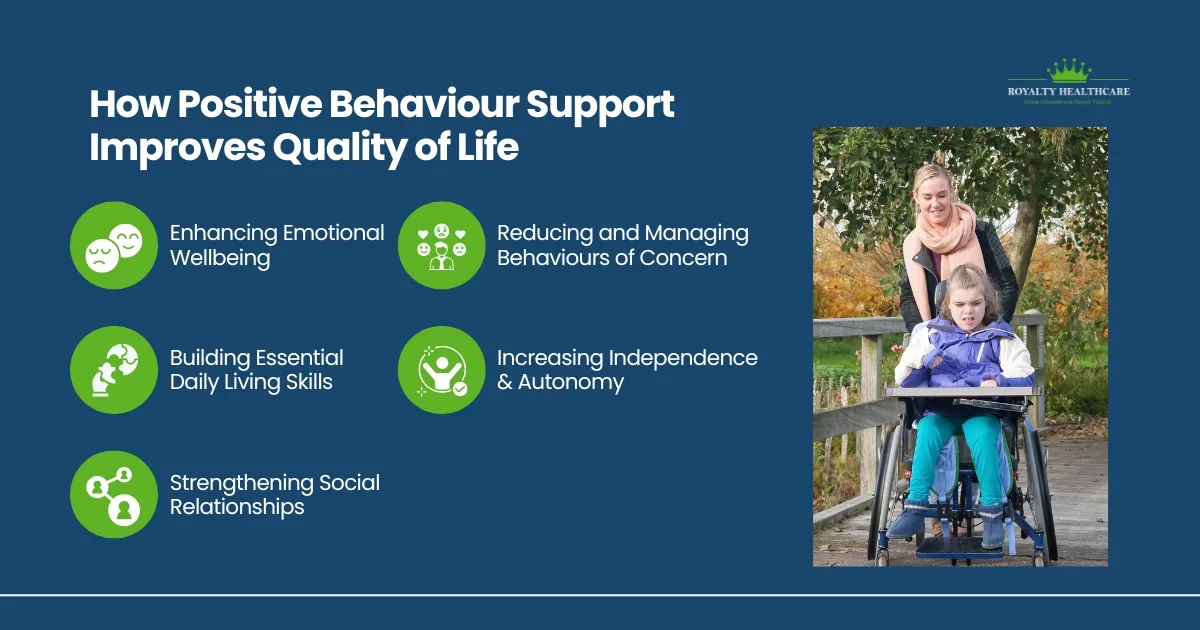
1. Enhancing Emotional Wellbeing
A key benefit of positive behaviour support is its ability to improve emotional wellbeing. PBS helps individuals understand their feelings, recognise triggers, and develop healthier ways to cope with distress. Through consistent support, people learn to make sense of their emotions and respond more calmly in challenging situations. This leads to increased confidence, better self-regulation, and a greater sense of safety and control in everyday life.
2. Reducing and Managing Behaviours of Concern
PBS reduces behaviours of concern by addressing why they occur. Instead of responding to behaviours reactively, PBS implements proactive strategies such as modifying environments, adjusting daily routines, improving communication systems, and teaching meaningful replacement skills. These approaches reduce frustration and create a more supportive environment for the individual. Ethical and least-restrictive practice is prioritised, aligning with national NDIS safeguards.
3. Building Essential Daily Living Skills
PBS focuses heavily on teaching practical and social skills that improve overall independence. Individuals learn communication techniques, decision-making, problem solving, and ways to participate confidently in social or community settings. These skills promote autonomy and reduce reliance on others.
4. Increasing Independence and Autonomy
Through skill building and supportive strategies, PBS empowers individuals to make their own choices, manage routines more effectively, and engage in meaningful daily tasks. This increased autonomy significantly enhances quality of life.
5. Strengthening Social Relationships
As emotional regulation improves and communication becomes easier, relationships naturally strengthen. Individuals feel more connected to their family, carers, peers, and wider community, contributing to a richer and more fulfilling life.
Key Components of an Effective Behaviour Support Plan (BSP)
a. Functional Behaviour Assessment (FBA)
An effective Behaviour Support Plan always begins with a Functional Behaviour Assessment (FBA). This assessment explores the reasons behind behaviours by examining patterns, triggers, the person’s environment, communication style, strengths, and unmet needs. Understanding why a behaviour occurs is essential for creating meaningful, long-term change.
b. Individualised Behaviour Support Planning
A BSP is tailored to the individual and includes:
- Personal goals that reflect their NDIS plan and aspirations
- Positive strategies and skill-building opportunities
- Communication supports that reduce frustration
- Environmental modifications to remove barriers
- Ethical safety strategies aligned with NDIS standards
- Clear monitoring and review processes
c. Proactive Strategies and Prevention
Proactive strategies aim to stop behaviours from occurring by adjusting environments, daily routines, sensory conditions, and social expectations. These preventive approaches promote stability and predictability.
d. Teaching New and Healthy Behaviours
PBS emphasises teaching skills such as emotional regulation, functional communication, social interaction, community engagement, and self-advocacy—creating sustainable, long-term behavioural change.
e. Ethical Safety and Crisis Planning
When behaviours escalate, safety strategies are used only when necessary and must follow NDIS rules, prioritising dignity and least-restrictive practice.
f. Monitoring and Reviewing the Plan
Regular data collection, feedback, and plan updates ensure the BSP remains relevant and evolves as the individual grows and progresses.
The Role of NDIS Behaviour Support Providers
1. What Behaviour Support Providers Do
An NDIS Behaviour Support Provider plays a vital role in delivering safe, ethical, and high-quality positive behaviour support to participants across Australia. As an organisation, a provider is responsible for overseeing the entire behaviour support process from initial assessments to the development and ongoing monitoring of Behaviour Support Plans (BSPs).
Their work begins with gathering detailed information about the participant’s needs through Functional Behaviour Assessments (FBA), observations, interviews with family and support workers, and reviews of the participant’s environment and daily routines. Once this information is collected, the provider ensures that a qualified practitioner within their organisation designs and lodges a personalised BSP with the NDIS Commission.
The provider also delivers training, coaching, and guidance to families, support workers, educators, and allied health professionals, ensuring everyone understands how to implement the plan correctly and consistently. Their responsibilities extend beyond plan development they monitor participant progress, review data, adjust strategies, and ensure that all aspects of service delivery meet NDIS Quality and Safeguarding requirements.
A critical part of the provider’s role is ensuring full NDIS compliance, including reporting restrictive practices, maintaining documentation, protecting participant rights, and ensuring all strategies align with least-restrictive, evidence-based approaches.
2. Expertise and Skills Required
A high-quality NDIS Behaviour Support Provider must employ practitioners with strong professional expertise in behavioural science, psychology, social work, or allied health. Their team must demonstrate:
- Deep understanding of behaviour assessment
- Trauma-informed and person-centred practice
- Experience supporting people with disability
- High-level communication and documentation skills
- Ability to design ethical, rights-based behaviour support plans
- Strong analytical skills for interpreting behaviour data
This expertise ensures the organisation delivers behaviour support that is effective, ethical, and respectful.
3. Collaboration With Support Networks
For PBS to be effective, providers work collaboratively with everyone involved in the participant’s life. This includes:
- Families, who offer insight into the person’s history and preferences
- Carers and support workers, who implement strategies daily
- Schools, therapists, and allied health teams, who contribute to consistent support
By fostering strong communication and shared understanding, providers ensure PBS strategies are applied consistently across all settings leading to meaningful, long-term improvements in the participant’s quality of life.
Positive Behaviour Support Through the NDIS
* Accessing PBS Through NDIS Funding
The National Disability Insurance Scheme (NDIS) provides funding for positive behaviour support to help participants improve their emotional wellbeing, reduce behaviours of concern, and develop meaningful skills. PBS is usually funded through the Capacity Building category, specifically under Improved Relationships, which supports participants who need specialised behavioural interventions.
Some participants may also receive funding for Specialist Behaviour Support services. This funding allows qualified NDIS Behaviour Support Practitioners to complete assessments, develop Behaviour Support Plans (BSPs), provide training to families and support workers, and offer ongoing monitoring to ensure strategies are effective.
Accessing PBS through the NDIS helps ensure support is ethical, participant-centred, and aligned with national practice standards.
* Provider Responsibilities Under NDIS
NDIS behaviour support providers have specific responsibilities to ensure safe and high-quality services. Providers must prioritise reducing or eliminating restrictive practices, always choosing the least-restrictive, most respectful strategies to support individuals. They are also required to protect participant rights, promote dignity, and ensure all interventions align with human rights principles.
Providers must submit necessary behaviour support reports to the NDIS Commission and maintain transparent, ethical, and well-documented records at all times. This ensures participants receive consistent, compliant care and that services are accountable under NDIS legislation.
How Families and Carers Can Support PBS
1. Consistency Across Settings
Positive Behaviour Support works best when strategies are used consistently across all parts of a person’s life. This means families, carers, educators, and support workers all follow the same approaches at home, in the community, and during daily routines. Consistency helps the individual feel safe and supported, reduces confusion, and strengthens the effectiveness of PBS strategies over time.
2. Understanding Behaviour Functions
A key part of PBS is understanding the function of behaviour why it happens and what the person is trying to communicate. Families benefit from recognising what triggers certain behaviours, what the individual might need, and how to respond in supportive ways. This insight allows carers to move from reacting to behaviour to understanding it, which creates more positive interactions.
3. Creating Supportive Home Environments
Families and carers can enhance PBS by creating environments that reduce stress and support success. Useful adjustments include:
- Using visual supports such as schedules or communication cards
- Establishing predictable routines
- Reducing sensory overload
- Reinforcing positive behaviours with praise or rewards
These small changes can greatly improve daily functioning.
4. Communication Between Everyone Involved
Ongoing communication between families, support workers, therapists, and behaviour practitioners ensures everyone is aligned. When all parties share updates and work together, PBS strategies are applied more effectively and respectfully, leading to better long-term outcomes.
Royalty Healthcare: Supporting Participants Through Person-Centred PBS
Royalty Healthcare is a trusted Australian disability support provider offering compassionate, person-centred, and goal-driven services. Their qualified practitioners specialise in NDIS behaviour support and Positive Behaviour Support, helping individuals build independence, reduce behaviours of concern, and improve overall quality of life. By using evidence-based strategies and working closely with families, carers, and support workers, Royalty Healthcare ensures every plan is practical, ethical, and tailored to the participant’s needs. With a strong commitment to safety, dignity, and positive outcomes, they support people across Australia to achieve meaningful, long-term progress.
How to Choose the Right Positive Behaviour Support Provider
1. Qualities to Look For
- NDIS-registered provider
- Clear, evidence-based processes
- Trauma-informed, person-centred approach
- Transparent communication
- Qualified and experienced practitioners
2. Questions to Ask Providers
- How do you conduct assessments?
- How often do you review plans?
- What training do you provide to families and support workers?
- How do you minimise restrictive practices?
3. Red Flags to Avoid
- Heavy reliance on restrictive practices
- Poor communication
- Lack of documentation
- No family involvement
Conclusion: PBS Creates Pathways to Better Living
Positive Behaviour Support creates meaningful pathways for individuals to build independence, improve emotional wellbeing, learn valuable life skills, and strengthen daily relationships. By focusing on proactive strategies, ethical practice, and person-centred support, PBS remains one of the most effective and empowering approaches within disability care.
For Australians seeking compassionate and evidence-based NDIS behaviour support, Royalty Healthcare offers dedicated guidance, professional expertise, and a strong commitment to long-term positive outcomes tailored to each participant’s goals.